Seven banks have given rPlus Energies a $450 million revolving credit facility. The security is not the projects the money will build. It is the roughly 1 GW of plants the company already runs. That inversion is becoming the standard way mature US developers fund construction, and it changes who carries the risk of a project that never gets built.
Key takeaways
- rPlus Energies secured a $450 million revolving credit facility with a three-year tenor, announced on 3 November 2026, with Canadian Imperial Bank of Commerce acting as lead left arranger and administrative agent.
- The lending group comprises seven institutions: CIBC, National Bank of Canada, Truist Financial, KeyBank, Wells Fargo, MUFG Bank and Zions Capital Markets.
- The facility is secured by the cash flows from rPlus's nearly 1 GW of active, revenue-generating operating assets, which Enerdatics records as including the 800 MW Green River project and the 125 MW Pleasant Valley Solar 2.
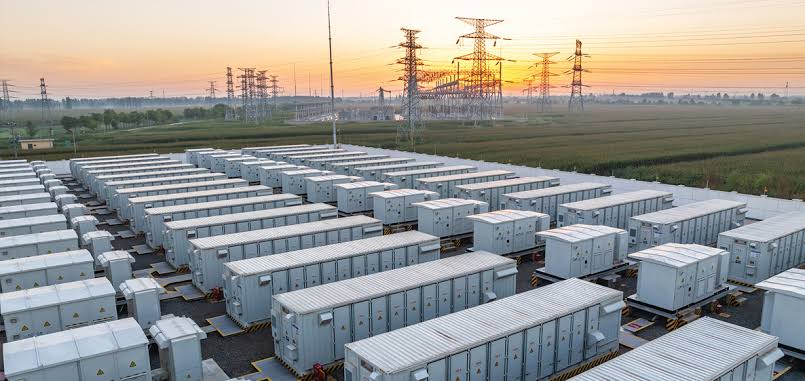
- Proceeds will fund the development and construction of near-term solar and battery storage projects across the American West, including the 400 MW Blacks Creek Energy Center now under construction.
- rPlus Energies is headquartered in Salt Lake City, was founded in 2018, and is backed by Sandbrook Capital and Gardner Group, with a portfolio spanning solar, battery storage, wind and pumped storage hydro.
What is a revolving credit facility doing in a development business?
Standing in for the equity a developer would otherwise have to find project by project. A revolver is a credit line that can be drawn, repaid and drawn again up to a limit for the life of the facility, in this case three years. Project debt works the other way: it is sized to one asset, drawn against construction milestones on that asset, and repaid out of that asset's revenue over fifteen or twenty years.
The difference matters most for the money a developer spends before anything is financeable. Interconnection deposits, procurement payments, security postings behind a power contract and permitting costs all fall due years before a project reaches financial close, and no project lender will fund them. A revolver secured on operating cash flow does, and it can be repaid when a project reaches close and raises its own debt, then drawn again for the next one.
What is the operating fleet actually being asked to carry?
About $0.49 million of credit for every megawatt of operating capacity behind it. Enerdatics records rPlus's operating fleet as nearly 1 GW and names 925 MW of it, the 800 MW Green River project and the 125 MW Pleasant Valley Solar 2. Against that, $450 million of committed capacity is modest gearing on assets that are built, contracted and generating.
The exposure sits on the other side. The proceeds fund projects that have not been built, among them the 400 MW Blacks Creek Energy Center. If a development project stalls, is withdrawn from an interconnection queue or loses its offtake, the drawn balance does not disappear with it. It remains an obligation of the company, serviced by the operating plants. Deriva Energy's two project-level construction loans in October show the alternative, where each asset's lenders look only at that asset and a failed project is ring-fenced from the rest of the business.
Why are seven banks lending against cash flow rather than one lending against a project?
Because a corporate facility is a credit decision about a company, and companies are harder for one bank to size alone than a single project is. A project lender underwrites a known capital cost, a known offtaker and a known interconnection. A corporate lender underwrites a management team, a pipeline and a fleet, and syndicating that across seven balance sheets spreads a judgement nobody can fully document.
The roles tell you how it was assembled. CIBC is lead left arranger, meaning it ran the process and sits first on the documentation, and it is also administrative agent, the bank that handles drawings and repayments on behalf of the group. Kirkland and Ellis advised rPlus and Milbank advised the lenders, the same pairing that has appeared on the largest facilities of this type.
Enerdatics records rPlus's $450 million alongside three comparable US developer credit facilities. Avantus has been upsized three times, from $522 million in July 2024 to $1.05 billion in August 2026 and then to $1.28 billion on 4 November 2026, one day after the rPlus announcement. Pivot Energy raised a $500 million three-year bilateral facility from Nuveen in October 2026, the same tenor as rPlus but from a single provider. Key Capture Energy's $300 million from Standard Chartered in August 2026 was a letter of credit facility, which issues guarantees rather than advancing cash.
What does the deal signal for US renewable development?
That the capital structure of US development is shifting from the project to the balance sheet, which Enerdatics reads as a broader trend among mature developers rather than a one-off. The common feature across rPlus, Avantus, Pivot Energy and Key Capture Energy is an operating fleet large enough to borrow against. A developer without one cannot do this, so the structure rewards companies that have already built something and widens the gap between them and those still waiting on a first project.
The second signal is about the American West specifically. rPlus is funding solar and battery projects in a region where interconnection timelines are long and the pre-close spend is heavy, and a three-year revolver is a bet that those projects reach close inside the facility's life. The tenor is the thing to watch. Three years is short against western development schedules, which means this facility will have to be extended or refinanced before Blacks Creek's successors are finished.
Frequently asked questions
How much did rPlus Energies raise and from whom?$450 million, announced on 3 November 2026, as a three-year revolving credit facility from seven banks: CIBC as lead left arranger and administrative agent, with National Bank of Canada, Truist Financial, KeyBank, Wells Fargo, MUFG Bank and Zions Capital Markets.
What secures the facility?The cash flows from rPlus's nearly 1 GW of active, revenue-generating operating assets, which Enerdatics records as including the 800 MW Green River project and the 125 MW Pleasant Valley Solar 2. The proceeds fund projects that are not yet built.
How does this compare with other US developer credit lines?Avantus holds the largest at $1.28 billion after a third upsize on 4 November 2026. Pivot Energy raised $500 million from Nuveen in October 2026 on the same three-year tenor, and Key Capture Energy secured a $300 million letter of credit facility from Standard Chartered in August 2026.
Ready to get deal-ready answers in seconds? Try Enerdatics Leap AI and access verified intelligence across M&A, financings, PPAs, projects and energy market developments through natural language.