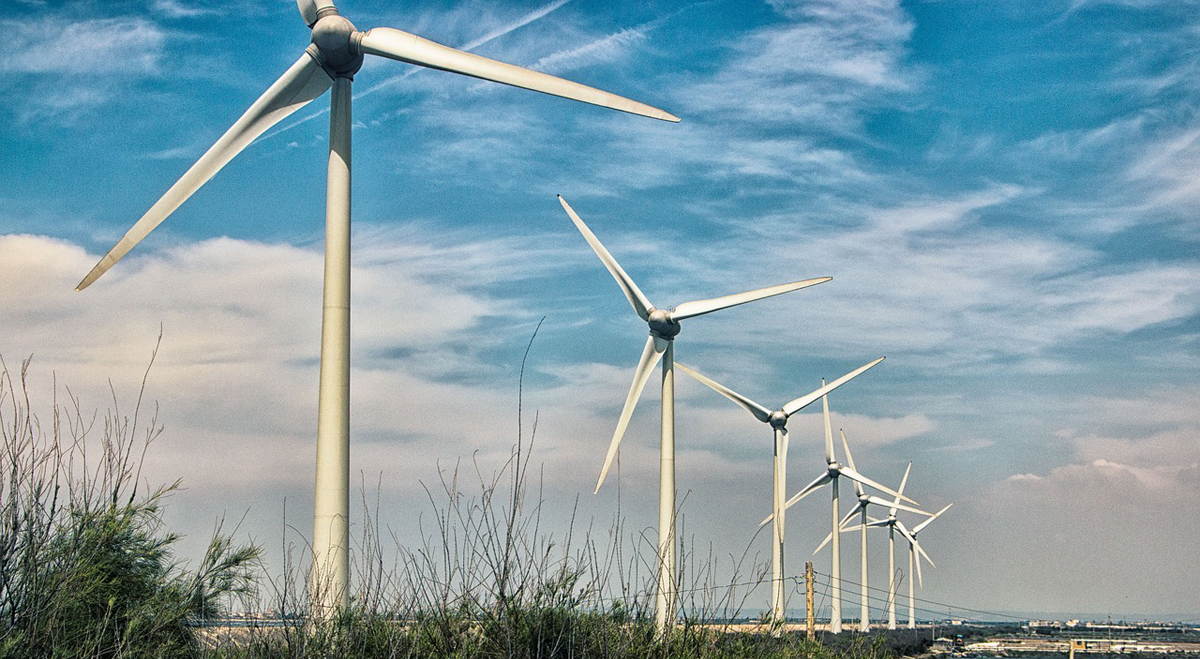
Greencoat UK Wind has paid about GBP 10.5 million for the last 20 percent of five wind farms it has part owned since 2017. Nine years ago it paid GBP 98 million for the first 80 percent. Nothing about the assets changed in between. Forty seven turbines, 96.4 megawatts, five sites within 25 miles of Peterborough.
Key takeaways
- Greencoat UK Wind has acquired the remaining 20 percent of a 96.4 MW onshore wind portfolio in Lincolnshire and Cambridgeshire, England, from EDF Invest for about GBP 10.5 million ($13.88 million), taking its holding to 100 percent.
- Greencoat UK Wind originally bought 80 percent of the same portfolio from EDF Energy Renewables in November 2017 for GBP 98 million ($128.3 million), a figure that included GBP 7 million of cash and working capital.
- The portfolio comprises 47 Senvion MM82 turbines rated at 2.05 MW each across five wind farms: the 16.4 MW Deeping St Nicholas, 12.3 MW Red House, 16.4 MW Glass Moor, 24.6 MW Red Tile and 26.7 MW Bicker Fen, commissioned between June 2006 and September 2008.
- Renewables Obligation accreditation ends on 31 March 2027 for Deeping St Nicholas and Glass Moor, which carry 32.8 MW between them, and on 31 July 2028 for the remaining 63.6 MW.
- All five wind farms sell power to the EDF Group under agreements expiring on 31 March 2027 at 93.5 percent of the applicable reference power price, and receive 93 percent of the ROC buy out price plus 100 percent of the recycle value.
Why does the final fifth cost so much less than the first four fifths?
Equity in an operating wind farm is priced off the cash the site will still produce, not the steel standing in the ground. In November 2017 the five farms had more than a decade of Renewables Obligation accreditation ahead of them. Today the nearest expires in a little over five months and the furthest in under two years. The turbines are the same turbines. What has gone is most of the supported life they were bought for.
Spread the 2017 consideration across the whole portfolio and it implies GBP 122.5 million for 100 percent of the equity, or GBP 1.27 million per MW. Strip out the cash and working capital it included and the figure is GBP 1.18 million per MW. The same arithmetic on this week's consideration implies GBP 52.5 million for 100 percent, or GBP 0.54 million per MW. Per unit of equity, the final tranche cost 43 percent of what the first one did.
What does a Renewables Obligation certificate still earn these wind farms?
The Renewables Obligation is the UK support scheme that preceded Contracts for Difference. An accredited generator earns one certificate for every megawatt hour it produces and sells it to a supplier alongside the power. Two features of the Peterborough arrangements are easy to miss.
The first is that power and certificates both go to EDF, under agreements expiring on the same day. The second is that neither is sold at full value. The power leaves at 93.5 percent of the applicable reference price and the certificates at 93 percent of the buy out price, with the recycle element passed through in full. An offtaker keeping 6.5 percent of power revenue and 7 percent of buy out value is being paid for route to market, and that payment stops when the agreements do. From April 2027 the portfolio needs a route to market EDF is not providing, and 32.8 MW of it starts selling unsupported output on the same date.
What is Greencoat actually buying with full ownership?
Control, and the right to make a decision a 20 percent minority could have delayed. Greencoat UK Wind will enter a joint development arrangement with EDF Power Solutions to progress repowering options, while the existing asset management and operations and maintenance arrangements stay in place. Repowering means replacing turbines on a site that is already consented and already connected rather than finding a new one, and it is why a price that looks thin against operating comparables looks ordinary against a development site.
The five farms sit within 25 miles of one another and share a single turbine model across all 47 machines, which makes one repowering programme easier to scope than five. A 2.05 MW turbine commissioned in 2006 is small by current standards. The site, the consent and the grid connection are what does not age.
Schroders Greencoat has been active at the opposite end of the asset life this year, acquiring the 50 MW Yarnton battery project in Oxfordshire before construction began. The common thread is not technology or stage. It is control of whatever decision comes next.
Enerdatics records 19 operational onshore wind transactions in the United Kingdom since the start of 2024, of which eight carry a disclosed value. Those eight run from $0.59 million per MW, paid by Forsa Energy for a 26.5 MW GCP Infrastructure portfolio in July 2026, to $4.05 million per MW implied by Greencoat UK Wind's own July 2025 sale of a 32.65 percent stake in a 52.7 MW portfolio, a value Enerdatics identified rather than one the parties disclosed. Grossed up to 100 percent, the EDF stake prices the Peterborough portfolio at roughly $0.72 million per MW, the second lowest figure in that set. Enerdatics' structured record for this deal carries no value, so the GBP 10.5 million is the consideration stated in the record, not a disclosed price.
What does the deal signal for UK onshore wind?
The Renewables Obligation closed to new capacity in 2017, and the fleet accredited under it is reaching the end of its support one cohort at a time. Each asset faces the same three way choice: run merchant, extend the life of the turbines, or repower. That choice is easier holding 100 percent of the equity than 80 percent, which is why minority buyouts of ageing portfolios are appearing more often than headline values suggest. Orsted took the same step in October 2026, buying the half of the 172.8 MW Gunfleet Sands offshore wind farms it did not already own at a price that looks implausible until you see what it is for.
Price per MW is the wrong lens on these transactions for as long as the end of support is doing the work. The useful questions are how much supported output remains and who controls what happens afterwards. For the Peterborough portfolio the answers are five months on a third of the capacity, 21 months on the rest, and from this week Greencoat alone. Macquarie ran the same calculation on alpha ventus, buying Germany's first offshore wind farm in the year its feed in tariff expired.
Frequently asked questions
How much did Greencoat UK Wind pay for the remaining EDF stake?About GBP 10.5 million, or $13.88 million, funded from the fund's own net cash generation. Enerdatics' structured record carries no disclosed deal value, so the figure comes from the transaction record narrative rather than from the priced comparables set.
When does Renewables Obligation support end for the portfolio?On 31 March 2027 for Deeping St Nicholas and Glass Moor, which carry 32.8 MW between them, and on 31 July 2028 for Red House, Red Tile and Bicker Fen, which carry 63.6 MW.
What happens to the EDF power purchase agreements?They expire on 31 March 2027, the same date as the ROC offtake arrangements. Until then the wind farms receive 93.5 percent of the applicable reference power price and 93 percent of the ROC buy out price, plus the full recycle value.
Enerdatics tracks every UK onshore wind transaction, including the ones where no price is disclosed, with grossed up per MW pricing on minority stakes. Explore Enerdatics for the full comparables set behind this analysis.