.png)
GCP Infrastructure Investments' completed sale of two operational UK onshore wind farms for approximately £11 million answers two questions the market keeps asking from opposite directions. For listed infrastructure trusts trading at stubborn discounts, it asks whether portfolio valuations are real, and the 13 percent premium to carrying value says yes. For the wider wind market, it asks what a turbine nearing the end of its design life is actually worth, and the price per megawatt says considerably less than the headline multiples for younger fleets. Both answers are contained in the same small transaction, which is what makes it a useful one.
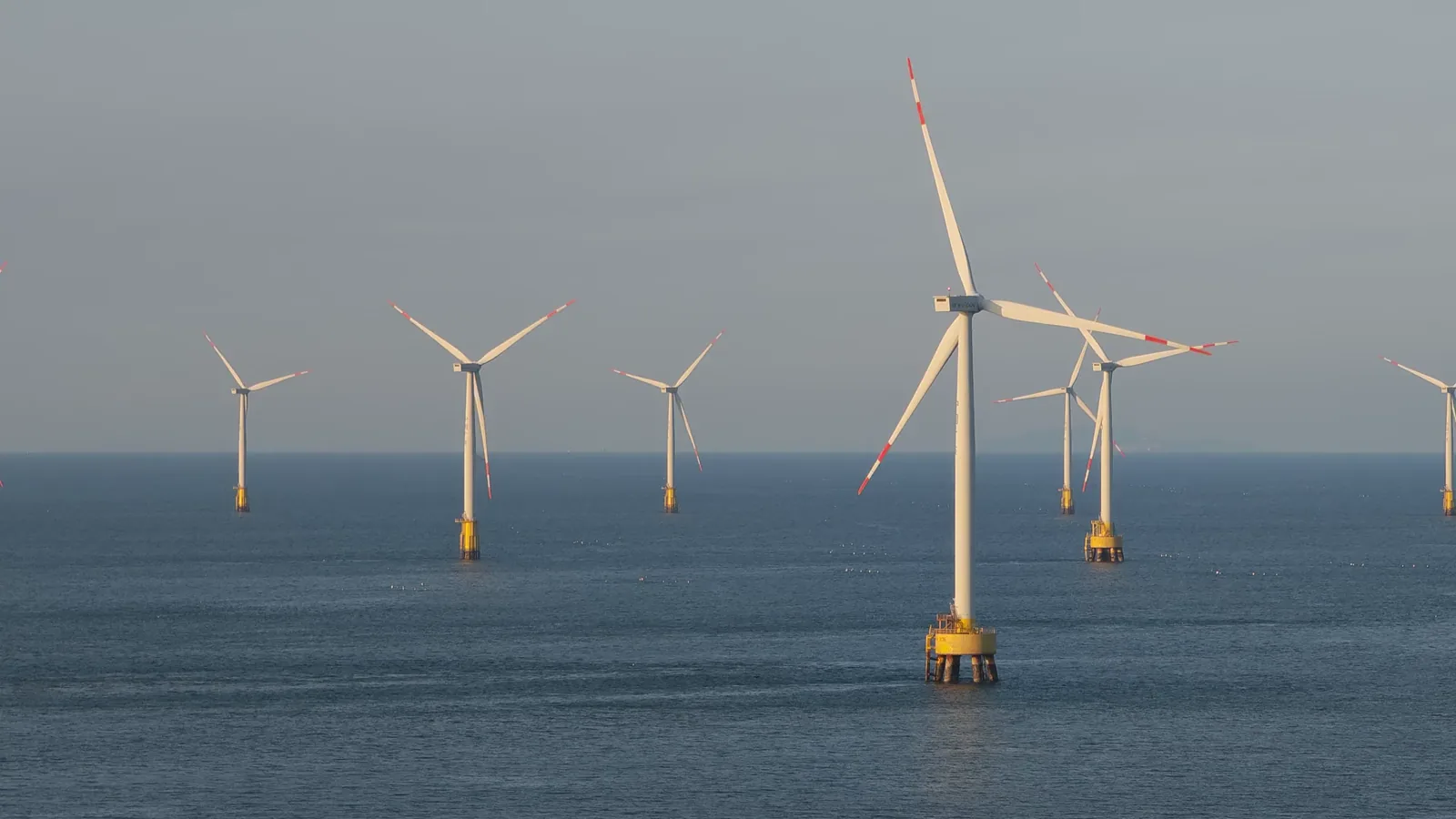
The disposed portfolio pairs two legacy assets. Burton Wold in Northamptonshire, at 20 MW across ten Enercon 2.0 MW turbines, entered operations in April 2006 and produces around 47 GWh annually, while Winscales Moor in Cumbria, at 5.95 MW across seven Vestas 0.85 MW machines, has run since May 2009 with output of roughly 18.8 GWh. Enerdatics' analysis puts the capacity-weighted operational history of the pair at approximately 19.6 years, with the turbines approaching the latter part of a standard 20-to-25-year design life. Burton Wold's original long-term PPA with E.ON has likely expired given its two decades of operation, leaving both projects selling power on a merchant basis supplemented by Renewables Obligation Certificates whose remaining subsidy term is limited. The undisclosed buyer is acquiring, in effect, a merchant tail with repowering optionality attached.
The transaction structure and the seller's use of proceeds tell the listed-market half of the story. Total consideration of around £11.7 million comprises day-one cash of £10.3 million, roughly £0.8 million of imminent tax-related proceeds and £0.6 million of milestone-linked deferred consideration. The sale completes a full ownership cycle, as GCP acquired the assets from Platina in November 2017 within a 70 MW portfolio transaction, and it advances the FTSE-250 trust's stated capital allocation policy: reduce equity-like renewable exposure, return to the fund's core identity in infrastructure debt, and deploy excess cash into share buybacks while the shares trade below net asset value. With a further £47 million loan repayment expected from a supported social housing disposal and the revolving credit facility fully undrawn, the balance sheet logic is straightforward, and the 13 percent premium to the March 2026 carrying value gives shareholders third-party evidence that the NAV being bought back is conservatively struck.
Enerdatics' benchmarks show exactly how far asset age moves the price. UK operational onshore wind has transacted at a median implied enterprise value of $1.08 million per MW since the start of 2024, with an interquartile range of $0.70 million to $1.76 million. The GCP portfolio changed hands at approximately $0.59 million per MW, below the bottom of that interquartile band, and the discount is entirely explicable rather than distressed: two decades of operating history, small individual project scale, limited remaining subsidy term and merchant revenue exposure all compress future cash flow, and the market prices the compression precisely. The instructive point for portfolio owners is that a below-range multiple and an above-NAV outcome coexisted comfortably in the same deal, because a properly marked book already reflects what aging assets can earn.
The depth of the market receiving these assets is equally clear in the data. Enerdatics records 27 UK operational wind transactions since the start of 2024 with disclosed value totalling around $6.5 billion, a secondary market liquid enough to absorb everything from billion-dollar portfolio stakes to sub-30 MW legacy pairs like this one. At the aging end of that flow, a distinct buyer class is forming: specialists who underwrite merchant tails, life extension and repowering rather than contracted yield. For them, a 2006-vintage site with proven wind resource, existing grid connection and established planning history is not a depreciating asset but a development option on the same land, and the entry price of an end-of-life portfolio is the cheapest route to a consented UK wind site that exists.
The forward signal runs across both halves of the story. On the listed side, disposal programmes that crystallise premiums to NAV are the most credible discount-closing tool trusts possess, and GCP's sequence of asset sales funding buybacks is likely to be repeated across the sector while discounts persist. On the asset side, the UK's first generation of commercial wind farms is now reaching the end of design life in volume, and as Renewables Obligation support tails off, a growing stream of small, aging, merchant-exposed portfolios will come to market priced not on what they were but on what their sites can become.
GCP's £11 million disposal is therefore a small deal that calibrates the market twice over. It confirms that trust NAVs can survive contact with real buyers, and it puts a clean, current price on the oldest cohort of UK wind, the cohort whose next owners will be judged on repowering, not yield.
Ready to get deal-ready answers in seconds? Try Enerdatics Leap AI and access verified intelligence across M&A, financings, PPAs, projects, and energy market developments through natural language.

.jpeg)