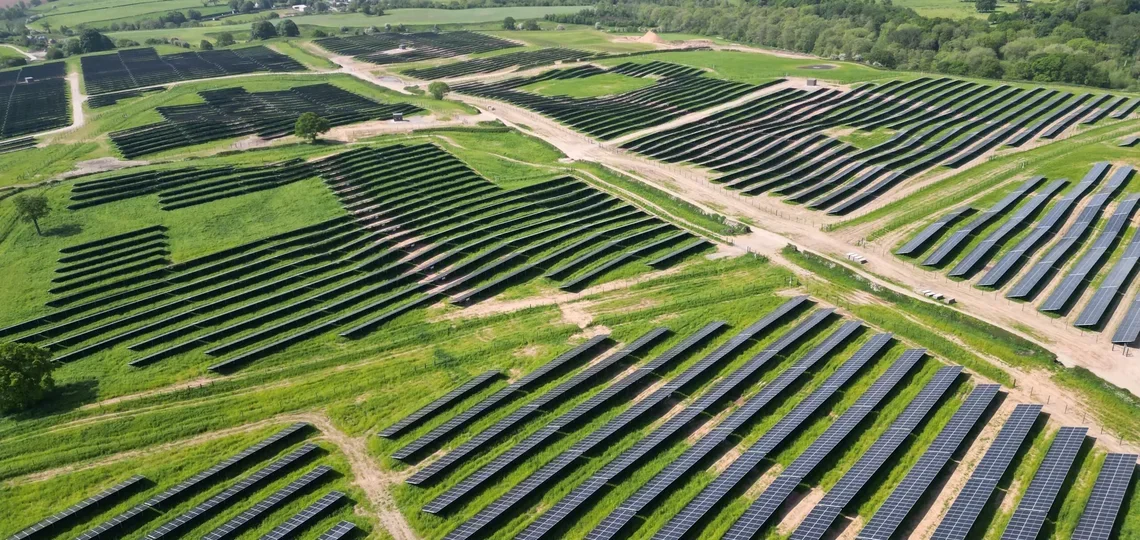
Centrica Energy has signed a power purchase agreement for two wind farms in Lithuania, Rokiskis and Jonava, supplied by Taaleri Energia and a subsidiary of Lords LB Asset Management. It is Centrica Energy's first renewable power contract in the country. The wind farms are not new to the market, though. Axpo signed a contract for the same two projects in 2021.
Key takeaways
- Taaleri Energia and Atsinaujinancios Energetikos Investicijos, a subsidiary of Lords LB Asset Management, signed a power purchase agreement with Centrica Energy for the Rokiskis and Jonava wind farms in Lithuania, announced on 1 March 2024.
- The Rokiskis and Jonava wind farms have a combined capacity of 136 MW and generate 408 GWh a year, equivalent to the consumption of about 197,000 households and offsetting about 123,000 tonnes of carbon dioxide equivalent a year.
- The Jonava wind farm in Kaunas County is 70 MW with estimated annual production of 240 GWh, and the Rokiskis wind farm in Utena County is 66 MW with estimated annual production of 168 GWh.
- The Centrica Energy agreement is Centrica Energy's first renewable power purchase agreement in Lithuania; its duration, price and contracted volume have not been disclosed.
- Axpo signed a power purchase agreement with Taaleri Energia in November 2021 covering 186 MW across the Anyksciai, Rokiskis and Jonava wind farms in Lithuania.
Why would the same wind farms need a second buyer?
The record does not say why, and it does not say whether the Axpo contract has ended, been reduced or runs alongside the new one. What it does show is that Rokiskis and Jonava have now been contracted to two different energy trading houses in a little over two years.
A power purchase agreement is a long-term contract under which a buyer agrees to take a project's output, or a share of it, at an agreed price. In Lithuania, as the Enerdatics records below show, most of those buyers are utilities and traders rather than end users. A trader like Centrica or Axpo takes the output and resells it, carrying the price risk in between.
The supplier side changed too. The 2021 contract names Taaleri alone as the supplier. The 2024 contract adds Atsinaujinancios Energetikos Investicijos, a Lords LB Asset Management subsidiary. A new co-supplier on the second contract suggests the ownership or the marketing of the two farms shifted between the deals.
Why does Jonava produce so much more than Rokiskis?
The two farms are almost the same size, yet one produces far more power. Jonava is 70 MW and is expected to produce 240 GWh a year. Rokiskis is 66 MW and is expected to produce 168 GWh a year.
On those figures, Jonava runs at a capacity factor of about 39 percent and Rokiskis at about 29 percent. A capacity factor is the share of its maximum possible output a plant actually produces over a year. A 10 point gap between two farms of similar size points to differences in wind resource, turbine choice or both. The record does not explain which.
For a buyer, that difference matters. Per megawatt of capacity, Jonava delivers about a third more energy each year than Rokiskis. If the contract prices the combined output, the buyer is in effect paying for a blend in which Jonava supplies 59 percent of the volume from about half the capacity. Taken together, the two farms run at about 34 percent.
What does the deal mean for Centrica Energy?
It gives Centrica Energy a first foothold in Lithuanian renewable power. The record describes the contract as its first renewable power purchase agreement in the country. The 408 GWh a year of output is enough, on the record's figures, for about 197,000 households.
The foothold did not stay small. In September 2024, Centrica Energy signed a second Lithuanian contract, this time with European Energy for a 198 MW renewable energy portfolio. Two contracts in six months took Centrica from no Lithuanian renewable supply to two separate sources of it.
Enerdatics records 10 power purchase agreements in Lithuania announced since the start of 2021. Seven of them have a utility or energy trader as the buyer, including Eesti Energia twice, Axpo, Enefit, Litgrid and Centrica Energy twice. Only one of the 10 discloses a price, a 7-year contract between Ignitis Group and Litgrid in June 2025 at $85.66 per MWh. Only three disclose a duration, at 7, 9 and 10 years, so the 2024 Centrica contract's silence on term is the norm rather than the exception. Only two of the 10 have a corporate end user as the buyer: Carlsberg's brewery subsidiary in 2023 and Mars in 2026.
What does the deal signal for Lithuania's renewable power market?
It shows a market where traders, not corporate buyers, still do most of the contracting. Centrica, Axpo and Eesti Energia take output from Lithuanian wind farms and manage the price risk themselves. That is different from markets where companies such as data centre operators or manufacturers sign directly with generators, as with a Swedish wind cluster split among several buyers including LyondellBasell.
It also shows that the same assets can be contracted more than once as owners and traders change. For a trader like Axpo, which also sells wind power to industrial customers from farms it does not own, buying output from Lithuanian projects is one source of supply among many. For a newer entrant like Centrica Energy, the same farms offered a ready-made way in.
Price transparency remains the gap. With one disclosed tariff among 10 contracts, outsiders can see who is buying in Lithuania but not what they pay. That leaves generation data, such as the gap between Jonava and Rokiskis, as one of the few hard numbers available for valuing what these contracts are worth.
Frequently asked questions
Which wind farms are covered by Centrica Energy's Lithuanian PPA? The 70 MW Jonava wind farm in Kaunas County and the 66 MW Rokiskis wind farm in Utena County, contracted from Taaleri Energia and a Lords LB Asset Management subsidiary.
How much power do the Rokiskis and Jonava wind farms produce? Together they generate 408 GWh a year, with Jonava expected to produce 240 GWh and Rokiskis 168 GWh.
Has the price of Centrica Energy's Lithuanian wind contract been disclosed? No. Neither the price nor the duration has been made public. Only one of the 10 Lithuanian power purchase agreements Enerdatics has recorded since 2021 discloses a tariff.
Ready to get deal-ready answers in seconds? Try Enerdatics Leap AI and access verified intelligence across M&A, financings, PPAs, projects, and energy market developments through natural language.