.png)
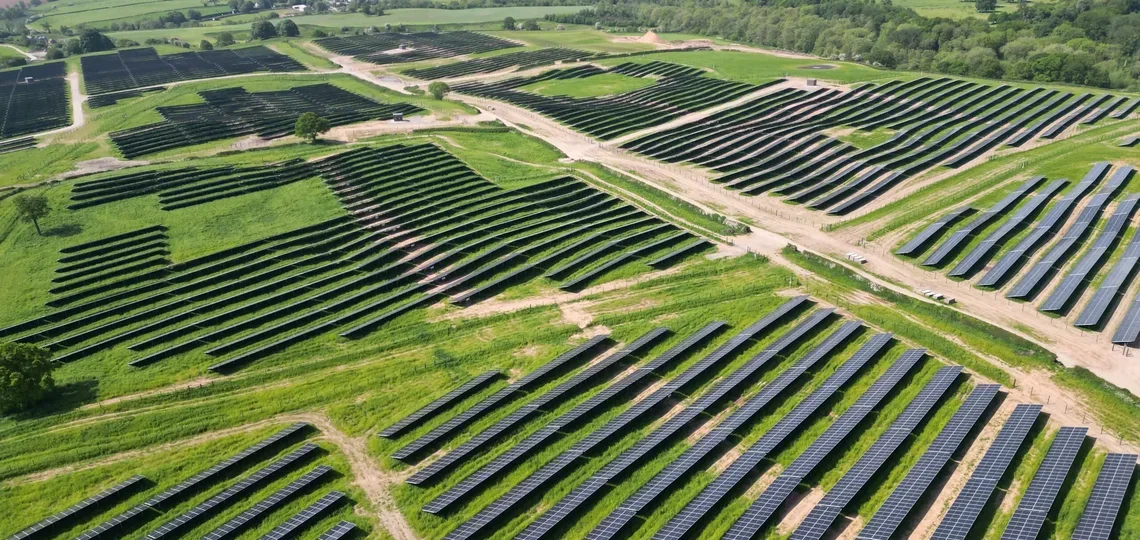
The launch of Altevera by Alba Infra Partners and Tevalia Capital, sealed with the acquisition of a roughly 60 MW French onshore wind portfolio from RWE, captures two of the strongest currents running through European renewable M&A: infrastructure funds creating platforms around proven management teams rather than buying assets directly, and tier-one utilities recycling capital out of small country portfolios to fund their core growth programmes. The transaction is modest in megawatt terms, but the structure around it is the story. Altevera is being built as a pan-European independent power producer focused on aggregating de-risked wind, solar and battery storage assets, initially across France, Italy, Germany and Poland, and this inaugural deal sets the template.
The acquired portfolio combines one operational wind farm with four projects that are under construction or ready to build, all holding secured permits and grid connections and all benefiting from long-term Contract for Difference support. The purchase price was not disclosed, and completion remains subject to regulatory approvals. Clifford Chance acted as legal advisor and Eight Advisory as financial advisor to the buyers. The transaction lifts the platform's de-risked asset base to around 120 MW with a visible pipeline of roughly 300 MW, supported by a separate co-development partnership with French repowering specialist Volta Group. From that foundation, Altevera targets more than 500 MW of operating and late-stage assets and a development pipeline exceeding 2 GW across Europe in the coming years.
The investment thesis is deliberately narrow in its risk appetite. Rather than carrying projects through permitting, interconnection and construction, the platform intends to partner with established developers and enter at the late stage, creating value through portfolio construction, refinancing, repowering and disciplined expansion. This last-mile positioning shortens the development cycle while limiting exposure to power price, regulatory and grid connection risk, precisely the exposures that have punished early-stage portfolios across Europe over the past two years. For Alba, which manages over 1.35 billion euros across more than 130 projects and is deploying its EOPF II fund, Altevera is the third platform investment of the vintage and a repeat of its playbook of backing industrial teams to build pan-European champions.
The seller side of the transaction is equally instructive. Enerdatics' M&A data shows RWE has featured as a seller in eight transactions since the start of 2025, spanning six countries and running from multi-gigawatt stake sales to sub-100 MW portfolio disposals. The programme includes the sale of a 49 percent stake in 2.68 GW of German offshore wind capacity to Norges Bank for approximately $4.3 billion, the divestment of a 3.09 GW UK development portfolio to KKR, the sale of 1.97 GW of operating Swedish wind to Aneo, and smaller exits in Poland, the United States and the United Kingdom. The French portfolio sale to Altevera fits the same capital recycling logic at the small end of the range: monetising non-core country positions while the strategic partnership attached to the deal keeps RWE commercially connected to future European opportunities alongside the buyer.
Although the consideration was undisclosed, Enerdatics' valuation benchmarks frame the market Altevera is buying into. French onshore wind transactions since the start of 2024 show a median implied enterprise value of approximately $1.06 million per MW for operational assets, with the interquartile range spanning $0.93 million to $1.09 million per MW, and construction-stage references sitting higher at around $1.3 million per MW. Across 34 French wind deals in the period, disclosed transaction value totals nearly $2 billion. A portfolio blending one operating farm with four CfD-backed construction and ready-to-build projects sits squarely in the most liquid and most contested part of that market, where secured revenues and cleared development risk command the premium.
The forward signal is that the platform-creation model is moving down-market. The first generation of European IPP build-ups was led by global funds writing billion-euro cheques for gigawatt platforms. What Altevera represents is the mid-market version: a specialist manager, an entrepreneurial deal team, a 500 MW near-term ambition and a strategy built on repeat partnerships with tier-one developers who need recycling counterparties for their late-stage assets. If the model works, utilities gain a reliable exit channel for small country portfolios, developers gain co-development capital, and the fragmented middle of the European renewables market consolidates into professionally managed platforms.
Altevera's debut acquisition is therefore more than a 60 MW portfolio transfer. It marks the formation of a new aggregation vehicle at the point in the risk curve where European renewable capital is most comfortable, and it signals that the sell-downs of the continent's largest utilities are now seeding the buyers of its next consolidation cycle.
Ready to get deal-ready answers in seconds? Try Enerdatics Leap AI and access verified intelligence across M&A, financings, PPAs, projects, and energy market developments through natural language.