Why TotalEnergies Walked Away From a Danish Offshore Project That Already Had Its Permit
.png)
TotalEnergies is withdrawing from Lillebælt Syd, a 165 MW nearshore wind project in Denmark's Little Belt strait, in which it held 72.25 percent. Municipal utility SONFOR, previously a 15 percent holder, is taking majority ownership of project company Lillebælt Vind and will spend the coming months assessing potential new partners and reviewing the business case, a process expected to conclude by the end of June 2027. European Energy remains a minority shareholder at 12.75 percent. Danish media report TotalEnergies is also exiting the 240 MW Jammerland Bugt project. This is not a project that failed on consent.
What is being abandoned?
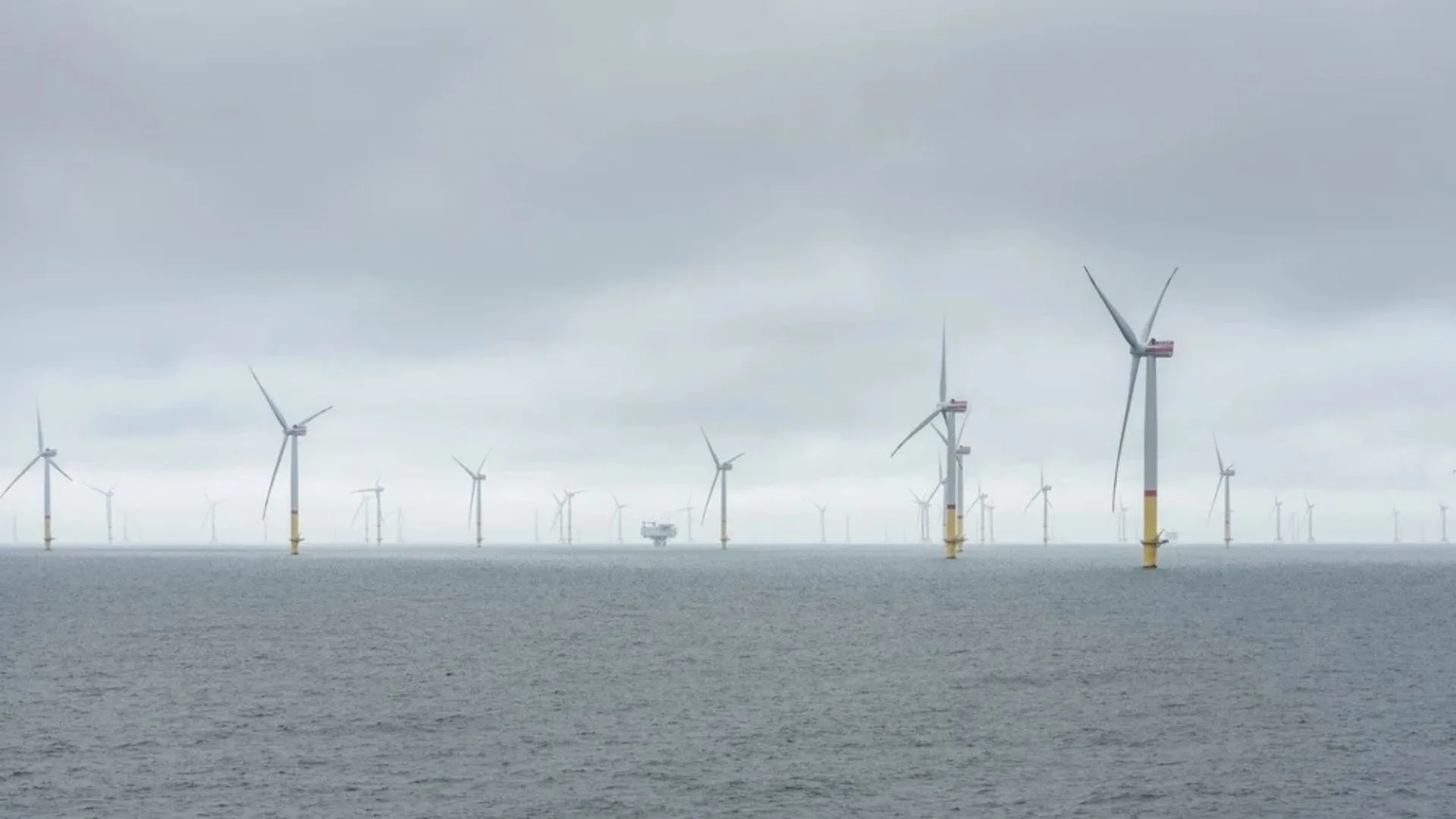
Lillebælt Syd comprises eleven 15 MW turbines totalling 165 MW, with expected annual generation of roughly 650 GWh, implying a load factor near 45 percent. It received its construction permit on 28 November 2024, has completed environmental investigations, and has finalised a grid connection agreement. Construction was expected to start in 2027 with commissioning in 2029 or 2030. The project originated as a local community wind initiative in 2011, passed from Sønderborg Municipality to SONFOR in 2020, drew European Energy in 2022 and TotalEnergies in January 2024. What is stalling is a fully consented, grid-connected project with a decade of development behind it.
Why does a permitted project lose its lead investor?
Because consent removes only one category of risk, and it is no longer the binding one. Offshore wind economics have deteriorated across turbine costs, vessel availability, financing rates and supply chain terms, and a project permitted under one set of assumptions can become unfinanceable under another without anything changing on the seabed. SONFOR has been explicit that it will use the coming months to reassess the business case, which is an unusually candid acknowledgement from the party now holding the majority. Chairman Kjeld Stærk framed TotalEnergies' decision as a wish to focus on other projects in its global portfolio. Both statements point the same way: the permit is intact and the numbers are the problem.
What did TotalEnergies actually give up?
A position it bought only thirty-one months earlier. In January 2024 TotalEnergies agreed to acquire 85 percent of the 240 MW Jammerland Bugt project and 72.2 percent of the 165 MW Lillebælt Syd from European Energy, a combined 405 MW of Danish offshore development, as part of a wider Nordic agreement covering Denmark, Finland and Sweden. Both were among the nine open-door projects confirmed by the Danish Energy Agency in December 2023. Reports indicate it is now leaving both. Walking away from 405 MW of permitted and part-permitted capacity less than three years after entering, having funded seabed surveys and geotechnical drilling in the interim, is a substantial write-down of effort rather than a portfolio tidy-up.
Enerdatics' data places this against a Danish market that has been thin at the ownership level. Enerdatics records only four Danish battery transactions since the start of 2023 and a similarly limited set of Danish generation deals, with pricing almost entirely undisclosed. What the record does show is European Energy's persistence: the company appears repeatedly as a seller across European markets and has retained its minority in Lillebælt Syd through two changes of majority partner, which is consistent with a developer that originates, brings in capital, and stays in the structure. It also appeared three times as a seller to Sosteneo in Enerdatics' records of that buyer's Italian and European activity. The pattern here is not a developer failing but an oil major reversing an integrated power push.
What does the deal signal for Nordic offshore wind?
The deal signals that permitted offshore projects can now stall for financial rather than regulatory reasons, and that municipal and community owners may end up carrying them. SONFOR is a utility owned by Sønderborg Municipality, responsible for local water, wastewater, heating and waste, and it now holds the majority of a project requiring several hundred million euros of construction capital. That is a mismatch it has openly said it needs a partner to resolve. Expect more Nordic nearshore projects to seek replacement investors, and expect the search to be harder than it would have been three years ago.
The wider signal concerns who develops offshore wind at all. Denmark's difficulties attracting bidders to its offshore tenders are well documented, and this is the same problem arriving from the other direction: a project already through consent, already grid-connected on paper, losing the balance sheet that was meant to build it. A ten-month review to June 2027 against a 2027 construction start implies the timetable is already gone. For the sector, the useful lesson is that securing permits was never the hard part in a market where the returns do not clear.
Key takeaways
- TotalEnergies is withdrawing from the 165 MW Lillebælt Syd nearshore wind project in Denmark, where it held 72.25 percent, with municipal utility SONFOR taking majority ownership and European Energy remaining at 12.75 percent.
- The project holds a construction permit granted on 28 November 2024, completed environmental investigations and a finalised grid connection agreement, with eleven 15 MW turbines expected to generate roughly 650 GWh a year.
- SONFOR will spend the coming months assessing new partners and reassessing the project's business case, a process expected to conclude by the end of June 2027, against a construction start previously expected in 2027.
- TotalEnergies acquired its stakes in January 2024, taking 85 percent of the 240 MW Jammerland Bugt project and 72.2 percent of Lillebælt Syd, a combined 405 MW, and Danish media report it is exiting both.
- The project originated as a community wind initiative in 2011 and passed to SONFOR from Sønderborg Municipality in 2020, so roughly fifteen years of development sit behind it.
Frequently asked questions
Why is TotalEnergies leaving the Lillebælt Syd project?SONFOR's chairman has characterised the decision as TotalEnergies wishing to focus on other projects in its global portfolio. SONFOR has separately said market conditions for offshore wind have changed significantly and that it will reassess the project's business case, indicating the constraint is economic rather than regulatory.
Who owns Lillebælt Syd now?SONFOR, the utility owned by Sønderborg Municipality, is taking the majority stake in project company Lillebælt Vind, with European Energy remaining a minority shareholder at 12.75 percent. Previously TotalEnergies held 72.25 percent, SONFOR 15 percent and European Energy 12.75 percent.
What stage had the project reached?Lillebælt Syd had completed environmental investigations, received its construction permit on 28 November 2024 and finalised a grid connection agreement, with construction expected to start in 2027 and commissioning in 2029 or 2030. It is planned as eleven 15 MW turbines totalling 165 MW.
Ready to get deal-ready answers in seconds? Try Enerdatics Leap AI and access verified intelligence across M&A, financings, PPAs, projects, and energy market developments through natural language.