TECO’s Australia Solar-Storage Investment Signals a Shift Toward Equipment-Led Renewable Infrastructure Entry
.png)
Australia’s solar-storage market is seeing a clear shift as power equipment manufacturers move beyond supply contracts and take direct equity positions in renewable infrastructure. TECO Australia & New Zealand’s investment in the Seaspray Solar + BESS project in Victoria marks this shift: an industrial equipment supplier is not only entering a project as a vendor, but as a 45% equity participant, expected EPC contractor, and future supplier of grid-critical equipment for a larger storage portfolio. Commercially, this matters because Australia’s renewable buildout is creating value not just for asset owners, but for companies that can combine balance-sheet participation, engineering delivery, and power infrastructure supply in one transaction.
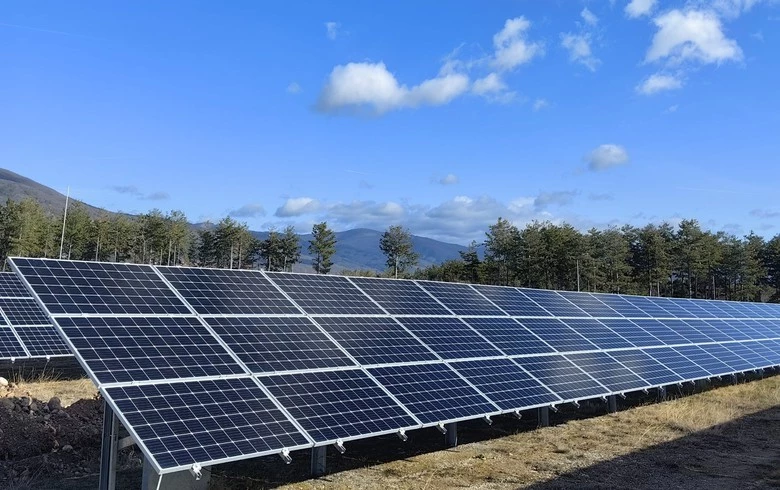
The anchor project is small in capacity but important in structure. Seaspray combines a 5.48 MWp solar farm with an 11 MWh battery energy storage system in Victoria. TECO is participating through a joint venture and strategic partnership with Billion Watts and Tun Green Power, holding a 45% stake while being positioned to secure the EPC contract. The follow-on Tranche 2 portfolio is much larger, totaling 50 MW / 200 MWh, with TECO planning to supply high-efficiency transformers, ring main units, and switchgear.
This is not a conventional asset acquisition by an infrastructure fund. It is a capability-led market entry by a company with more than 40 years of operating history in Australia across motors, power systems, HVAC, and industrial equipment. TECO’s move suggests that equipment suppliers with local operating platforms are increasingly looking to capture more of the value chain as renewable projects become more storage-heavy, grid-sensitive, and delivery-constrained.
The commercial logic is straightforward. A small solar-plus-storage project allows TECO to prove delivery capability, deepen local partnerships, and create a reference asset. The larger 50 MW / 200 MWh Tranche 2 portfolio then gives the company a route to monetize its core equipment business through transformers, RMUs, and switchgear. In effect, TECO is using minority equity to secure a broader infrastructure role.
This reflects a wider investor behavior shift in Australia. Enerdatics’ Q3 2025 M&A analysis found that Australia was one of APAC’s strongest renewable M&A markets, with international private equity firms such as KKR and La Caisse pursuing domestic solar and BESS developers including CleanPeak and Edify Energy. The same report noted that Australian BESS activity remained steady, with around 500 MW of regional storage transactions during the quarter, while firms such as AMPYR Energy and Ace Power targeted two- to four-hour systems across New South Wales and Western Australia.
TECO’s deal differs from those PE-led platform moves, but it responds to the same market signal: storage is becoming central to Australian renewable infrastructure. Investors are no longer backing solar capacity alone. They are backing assets that can support dispatchability, manage intermittency, and provide grid services in markets where renewable penetration is creating more operational complexity.
The capital stack signal is also important. TECO’s 45% stake is a partial ownership position, not a full acquisition. That structure limits upfront balance-sheet exposure while giving TECO commercial rights across EPC and equipment supply. For industrial companies entering renewables, this can be more attractive than buying full platforms at infrastructure multiples. It creates a route to recurring project participation without immediately competing head-on with private equity buyers for large portfolios.
For developers such as Billion Watts and Tun Green Power, the benefit is execution support. Partnering with TECO brings engineering depth, equipment supply credibility, and local operating experience. In a market where storage projects depend heavily on grid equipment, integration, and delivery certainty, that can improve bankability and reduce execution risk. For TECO, the benefit is strategic repositioning: the company moves from supplying components into shaping project delivery and capturing infrastructure upside.
The implication for sellers and developers in Australia is that buyer pools are broadening. Renewable projects, particularly solar-plus-storage and distributed BESS portfolios, can attract not only infrastructure funds and IPPs but also equipment manufacturers seeking downstream exposure. Projects with clear grid connection pathways, modular storage design, and equipment-heavy delivery needs are likely to be especially attractive to this category of buyer.
The forward-looking signal is that Australia’s renewable M&A market may see more hybrid partnership models where strategic equipment companies take minority stakes to secure EPC, integration, and grid equipment roles. TECO’s Seaspray investment is small by capacity, but commercially meaningful because it shows how industrial suppliers can use storage-led renewables to move up the value chain. As Australia’s BESS pipeline expands, projects that combine near-term delivery visibility with equipment supply upside are likely to command stronger strategic interest than standalone solar assets.
Want to track the latest M&A, financings, PPAs, and key developments across the industry? Explore the Enerdatics Insights page.