SK Ecoplant and China State Construction Engineering Corporation have signed up to build a green hydrogen and ammonia plant in Egypt's Suez Canal Economic Zone. The electrolyser is a quarter the size of a rival plan signed the same day. Yet it is designed to squeeze a third more hydrogen out of every megawatt. The plan also carries something its neighbour does not: a price.
Key takeaways
- SK Ecoplant and China State Construction Engineering Corporation (CSCEC) announced on 29 February 2024 a partnership to develop a green hydrogen and green ammonia plant in the Suez Canal Economic Zone (SCZone) in Egypt.
- The SK Ecoplant and CSCEC project involves a total investment of about $1.945 billion and aims to reach full operational capacity by 2029.
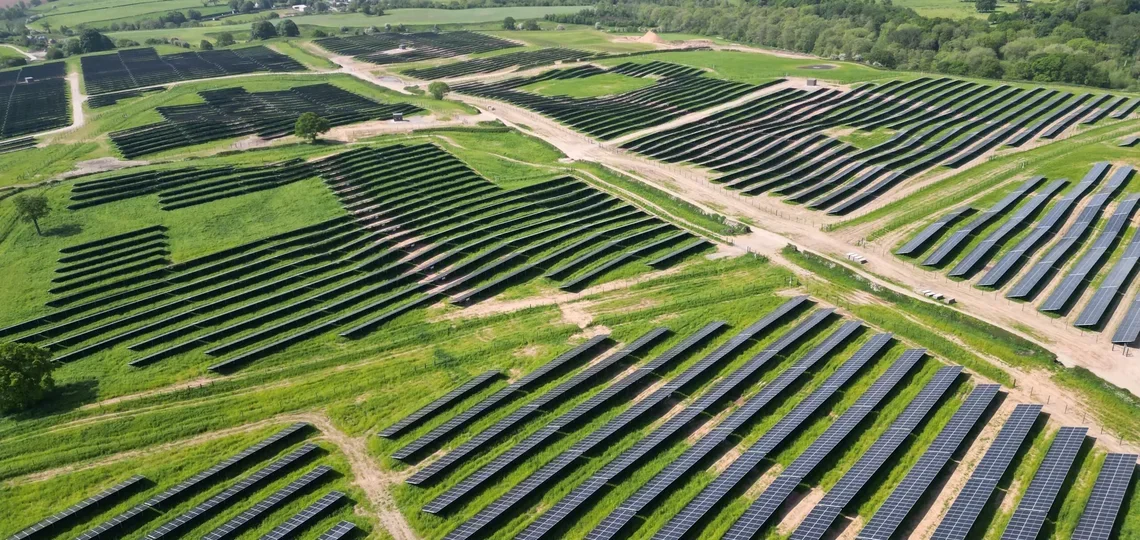
- The SCZone plant will use a 250 MW water electrolyser, including Bloom Energy's solid oxide electrolysers, powered by a 500 MW solar project and a 278 MW onshore wind project.
- The SK Ecoplant project is designed to produce 50,000 tons of green hydrogen and 250,000 tons of green ammonia a year.
- The partners signed a memorandum of understanding with Egypt's New and Renewable Energy Agency, the Egyptian Electricity Transmission Company, the SCZone authority and the Sovereign Fund of Egypt, within a series of SCZone agreements totalling more than $40 billion over a decade.
What makes the SK Ecoplant design different?
The electrolyser technology. SK Ecoplant's plan includes solid oxide electrolysers supplied by Bloom Energy, a type that splits water at high temperature rather than at the lower temperatures of more common electrolyser designs. An electrolyser is the machine that uses electricity to separate water into hydrogen and oxygen, and it is usually the single most expensive component in a green hydrogen plant.
The design numbers reflect an ambitious output target. The plant aims for 50,000 tons of hydrogen a year from 250 MW of electrolysis, which works out at 200 tons per megawatt. Smartenergy's eAmmonia plan, signed with the Egyptian government the same day, targets 150 tons per megawatt from a 1 GW plant. The records do not break down how much of the difference comes from the technology and how much from operating assumptions.
Generation is oversized in both. SK Ecoplant plans 778 MW of wind and solar for 250 MW of electrolysis, a ratio of about 3.1 to 1. Building more generation than electrolysis keeps the electrolysers running when the sun sets or the wind drops. Mixing solar with onshore wind helps for the same reason, since the two tend to produce at different times of day.
What does $1.945 billion buy in Egyptian hydrogen?
It buys an integrated plant: wind farm, solar farm, electrolysers and ammonia synthesis in a single budget. That makes the figure hard to compare directly with anything else, but the ratios are still useful.
Spread across annual hydrogen output, $1.945 billion is about $38,900 for each ton of yearly production capacity. Spread across the electrolyser, it is about $7.8 million per megawatt, with the renewable fleet and ammonia plant included in that sum. Neither figure is a clean equipment cost, because the record does not split the investment between generation and hydrogen. Both are still more than Smartenergy's same-day agreement allows anyone to calculate, since it discloses no investment figure.
The ammonia step is the export route. Hydrogen is difficult to ship as a gas, so the plant converts it into ammonia, which can be carried in tankers. The project's figures imply five tons of ammonia for each ton of hydrogen.
Why does the Suez Canal location matter?
Because the SCZone is where Egypt is concentrating its green hydrogen ambitions. The memorandum brings in four state bodies at once: the renewable energy agency, the transmission company, the zone authority and the sovereign fund. Between them they control land, grid access and potential state equity. Leap's record places the project within SCZone agreements worth more than $40 billion aimed at deploying green hydrogen and renewable energy over a decade.
The zone also puts producers beside the Suez Canal itself. Green ammonia is one of the candidate fuels for decarbonising shipping, and a plant on the canal could in principle supply vessels as well as export cargoes.
Enerdatics' data shows the scale of the gap between ambition and pricing in Egypt. Leap records nine green hydrogen deals in the country from January 2022 to February 2024. All nine are partnerships or joint ventures, and none carries a disclosed deal value. SK Ecoplant's is one of two signed on 29 February 2024. Its $1.945 billion is a project investment estimate rather than a transaction price, but it is the only one of the two same-day agreements to attach a dollar figure to the asset itself.
What does the deal signal for Egyptian green hydrogen?
It signals that Korean and Chinese engineering groups are positioning themselves early. CSCEC brings construction scale. SK Ecoplant brings a technology partner in Bloom Energy and a specific electrolyser choice. Together they offer Egypt a package that covers design, build and equipment, which is a different proposition from a developer seeking partners later.
It also signals what is still missing. A date of 2029, a budget and a design are on the table. An offtaker for 250,000 tons of ammonia a year is not. Programmes elsewhere, such as the UK's first hydrogen allocation round, backed their first projects with an agreed strike price. Egypt's model leans on export demand instead.
The comparison with Smartenergy will be the one to watch. Two plans, signed on the same day, with different scales and different efficiency targets. Whichever reaches a final investment decision first will tell the market whether Egypt's buyers reward size or output per megawatt.
Frequently asked questions
How much will the SK Ecoplant and CSCEC project in Egypt cost? The green hydrogen and ammonia project involves a total investment of about $1.945 billion, covering a 250 MW electrolyser and its 778 MW of dedicated wind and solar, with full operation targeted for 2029.
How much hydrogen will the SCZone plant produce? The plant is designed to produce 50,000 tons of green hydrogen a year, converted into 250,000 tons of green ammonia.
Which electrolyser technology will the project use? The 250 MW water electrolyser will include Bloom Energy's solid oxide electrolysers, according to the Leap record of the agreement.
Ready to get deal-ready answers in seconds? Try Enerdatics Leap AI and access verified intelligence across M&A, financings, PPAs, projects, and energy market developments through natural language.