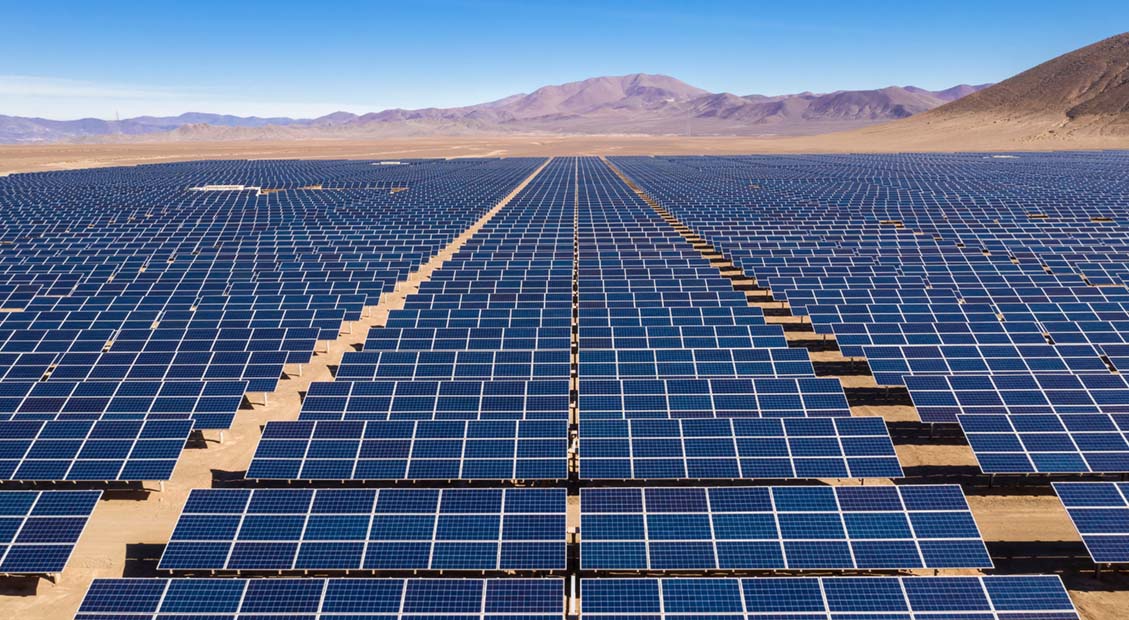
Masdar, EDF Renewables and Korea Western Power Company have signed a power purchase agreement with the Emirates Water and Electricity Company for the 1.5 GW Al Ajban solar project in Abu Dhabi. The contract runs for 30 years. Across the Gulf's utility solar contracts that disclose a term, every other one runs for 20, 25 or 35 years. None of them discloses a price.
Key takeaways
- Masdar, EDF Renewables and Korea Western Power Company (KOWEPO) signed a 30-year PPA with the Emirates Water and Electricity Company (EWEC), announced on 26 April 2024, for the 1.5 GW Al Ajban solar PV project in the UAE.
- The Al Ajban PPA is structured as an energy purchase agreement, under which EWEC pays only for the net electrical energy the plant supplies.
- Al Ajban is located about 70 km northeast of Abu Dhabi and is owned 60 percent by Masdar, 20 percent by EDF and 20 percent by KOWEPO, with Masdar acting as the local shareholder.
- The Al Ajban solar project is expected to power 160,000 households and reduce Abu Dhabi's carbon emissions by 2.4 million tonnes a year.
- Of 38 solar PPAs Enerdatics records in the Gulf Cooperation Council states since the start of 2022, none discloses a tariff, and Al Ajban is the only utility contract with a 30-year term.
What does an energy purchase agreement leave with the developer?
It leaves the generation risk. Under an energy purchase agreement the buyer pays for each unit of electricity actually delivered, measured at the meter. If the plant produces less, because of weather, outages or equipment wear, the seller earns less. Some utility contracts instead pay a plant for being available, whatever it produces. Al Ajban's is not one of those.
That puts the consortium's revenue on the plant's output for three decades. Masdar, EDF and KOWEPO will design, finance, build and operate the project, so the same group that carries the performance risk also controls the operation that drives it.
For the buyer, the structure is simple. EWEC knows what it pays per unit and pays only for units it receives. For the lenders, it means the debt is sized against expected production rather than a fixed availability payment.
Why does a 30-year term matter?
It matters because a solar plant can keep generating after its contract ends. A longer contract covers more of that life with a fixed buyer, which reduces the merchant tail. A merchant tail is the period after a contract ends when the plant sells power at market prices.
A longer term also spreads the capital cost over more years of contracted revenue. That can support a lower price per unit, although with no tariff disclosed the effect cannot be measured here. What can be measured is where the term sits against its neighbours.
Al Ajban's financing followed in September 2024. EDF Renewables, KOWEPO and Masdar secured a package from a group of banks including the Export-Import Bank of Korea, Sumitomo Mitsui Banking Corporation, HSBC, Standard Chartered, Credit Agricole and BNP Paribas. Leap does not record the amount.
Where does Al Ajban sit among Gulf solar contracts?
It sits between two clusters. Enerdatics' data shows 38 solar PPAs in the Gulf Cooperation Council states since the start of 2022, and not one of them carries a disclosed tariff. Nineteen are contracts with a state utility or procurement company that disclose a term.
Fourteen of those 19 run for 25 years, all of them Saudi contracts with the Saudi Power Procurement Company. Two Omani contracts run for 20 years. Two run for 35 years, both signed by ACWA Power and Badeel with the Saudi buyer, including the 2 GW Al Shuaibah 2 contract and a 4.55 GW three-project deal. That pair is the same partnership behind the 27.75-year loan for ACWA Power's Saudi solar projects.
Al Ajban is not the largest contract in the set. The 2 GW Al Sadawi project, signed by Masdar, KEPCO and GD Power, is bigger, as are the multi-project Saudi portfolios of 4.55 GW, 5.5 GW and 12 GW signed by ACWA Power, Badeel and, on the last two, Saudi Aramco Power Company. Masdar appears as a supplier on eight of the 38 contracts, more than any other company, and EDF on six.
Al Ajban is the only one at 30 years. It is also the only UAE utility solar contract in the set with a disclosed term. The next EWEC solar contract in the record, for the 600 MW Khazna project with ENGIE and Masdar in October 2025, carries no disclosed duration.
What does the deal signal for Gulf solar procurement?
It signals that the Gulf's buyers are not working from one template. Saudi Arabia's procurement company has settled on 25 years for most rounds, with 35 for its largest ACWA Power partnership. Oman has used 20. Abu Dhabi has chosen 30 for its biggest contract in the period.
It also shows how Abu Dhabi has built its largest plant. A state buyer signs, a local champion takes the majority, and foreign utilities take minorities. Masdar holds 60 percent of Al Ajban, with EDF and KOWEPO at 20 percent each. Leap notes that the UAE is now home to four of the world's largest single-site solar plants, three of them in Abu Dhabi.
The timing remains the open question. The PPA announcement pointed to operation in the third quarter of 2026. Leap's project record now carries an operational date of 31 May 2027. For a contract paid only on energy delivered, every month of delay is a month without revenue.
The bigger gap is price. With no tariff disclosed across 38 Gulf solar contracts, the terms that can be compared are length, structure and ownership. Al Ajban stands out on the first, and the rest of the region will show whether 30 years becomes a pattern or stays an exception.
Frequently asked questions
Who signed the Al Ajban solar PPA? Masdar, EDF Renewables and Korea Western Power Company signed the power purchase agreement with the Emirates Water and Electricity Company (EWEC), announced on 26 April 2024, for the 1.5 GW Al Ajban solar PV project.
How long is the Al Ajban PPA? The Al Ajban PPA runs for 30 years. Among 19 Gulf utility solar contracts that disclose a term since 2022, it is the only one at 30 years, against 14 at 25 years, two at 20 years and two at 35 years.
What type of contract is the Al Ajban PPA? It is an energy purchase agreement, meaning EWEC pays only for the net electrical energy the plant supplies, so the project consortium carries the risk of lower output.
Ready to get deal-ready answers in seconds? Try Enerdatics Leap AI and access verified intelligence across M&A, financings, PPAs, projects, and energy market developments through natural language.