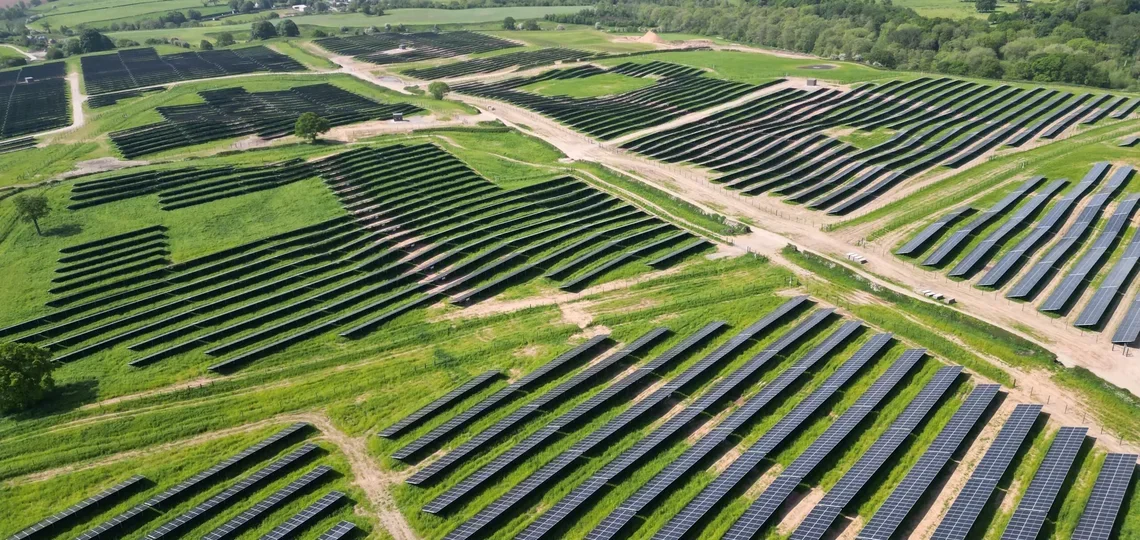
Masdar has agreed to buy control of TERNA ENERGY, the largest investor in Greek renewables, and to bid for the rest of its shares. The seller, GEK TERNA, is TERNA ENERGY's largest shareholder. It is leaving the company, but not entirely. The agreement gives it several routes back into the assets it is selling.
Key takeaways
- Masdar announced on 20 June 2024 that it had agreed to acquire a 70% stake in TERNA ENERGY at $21.48 per share, for an enterprise value of about $2.4 billion for the stake.
- The Masdar deal values TERNA ENERGY at an equity value of $2.57 billion and an enterprise value of $3.43 billion on a 100% basis, about 16.2 times the company's EBITDA of $211.49 million for the 12 months to 31 March 2024.
- TERNA ENERGY's portfolio totals 12.2 GW, of which about 1.22 GW is operational and about 11 GW is a pipeline at various stages, including around 1.2 GW under construction or ready to build.
- Under the TERNA ENERGY agreement, GEK TERNA can buy 50% equity interests in hydro, pumped storage and offshore wind projects totalling about 3 GW nine months after closing, and Masdar can sell 50% of the Amfilochia pumped storage project back to GEK TERNA.
- Masdar completed the 100% acquisition of TERNA ENERGY through a mandatory tender offer and squeeze-out in April 2025, and TERNA ENERGY's shares were delisted from the Athens Stock Exchange in May 2025.
How did Masdar get from 70% to 100%?
In stages, starting with commitments rather than a public bid. Masdar first reached agreement and irrevocable undertakings with GEK TERNA, which held 36.59%, and with other shareholders to buy 70% of the shares. An irrevocable undertaking is a binding promise by a shareholder to sell, which gives a buyer certainty of control before any offer is made to the wider market.
Control then triggered a mandatory tender offer for the rest. A mandatory tender offer is a bid the law requires a buyer to make to all remaining shareholders once it crosses a control threshold, so minority investors can sell on the same terms. Masdar offered cash at the same $21.48 per share.
The European Commission approved the acquisition of sole control on 10 October 2024. The transaction completed on 28 November 2024, when Masdar also acquired an additional 3% stake. In April 2025 the tender offer and a squeeze-out of the remaining 30% took Masdar to 100%, and in May 2025 the company left the Athens Stock Exchange.
What does GEK TERNA keep after the sale?
Four provisions keep GEK TERNA close to the business it is selling.
First, GEK TERNA will acquire specified non-core assets from TERNA ENERGY before and shortly after closing. Second, about nine months after closing, it can buy 50% equity interests in specific hydroelectric, pumped storage and offshore wind projects totalling around 3 GW. Third, Masdar, through TERNA ENERGY, can sell 50% of the Amfilochia pumped storage project back to GEK TERNA on a similar timetable. Fourth, GEK TERNA will not compete in TERNA ENERGY's core business in Greece, Poland and Bulgaria from signing until three years after closing, with exemptions for existing activities.
The options cover pumped storage, hydro and offshore wind, not the onshore wind that makes up about 1 GW of the 1.22 GW operating fleet. Pumped storage is a form of energy storage that pumps water uphill when power is cheap and releases it through turbines when power is needed. Splitting those projects 50:50 would share their construction risk between a buyer focused on renewables and a seller that wants to be the leading diversified infrastructure group in Greece and Southeast Europe.
The pattern of sharing large projects has continued. In January 2025, Leap records Motor Oil Hellas acquiring a 50% stake in a 400 MW offshore wind farm in Greece from TERNA ENERGY.
Is 16 times EBITDA a high price for TERNA ENERGY?
It is above the middle of the European range, though not at the top. EBITDA is earnings before interest, tax, depreciation and amortisation, a rough measure of operating cash flow. Dividing enterprise value by it gives a multiple that is the usual way to compare company takeovers, because it prices the whole business rather than its megawatts.
Per-MW measures do not work here, and the record shows why. Spread across the full 12.2 GW, the $3.43 billion enterprise value comes to about $0.28 million per MW, which looks cheap. Spread across the 1.22 GW actually operating, it comes to about $2.81 million per MW, which looks expensive. Neither is right, because the price pays for an operating fleet and a large pipeline together. The operating assets have run for about eight years on a weighted average basis, and 1.9 GW of operating and near-term assets hold power purchase agreements with a weighted average of about 14 years left to run.
At about 16.2 times EBITDA and about 9 times revenue of roughly $382 million, the price reflects what the business earns today plus the value buyers place on what it could build.
Enerdatics' data shows 243 corporate renewable energy deals in Europe announced between January 2023 and June 2025, of which 19 carry a disclosed EV/EBITDA multiple. The median of those 19 is 14.74 times and the upper quartile 17.83 times. At about 16.2 times, TERNA ENERGY sits above the median and below the upper quartile. Among wind-led corporate deals in Europe over the same period, the closest priced comparable is a French corporate wind deal valued at about 16.1 times EBITDA in October 2024. In Greece itself, Enerdatics records 26 renewable energy M&A deals over the period, of which 10 carry a disclosed value, and TERNA ENERGY is by far the largest.
What does the deal signal for Greek renewables?
It signals that Greek renewables are consolidating toward larger owners, and that local groups are trying to stay involved on their own terms. PPC has taken a similar route through joint structures, as in PPC Renewables and Intrakat Group agreeing a two-part deal for a Greek wind pipeline. GEK TERNA's options do something similar from the selling side.
It also shows how Masdar is building its portfolio. In the same year it agreed to buy half of Terra-Gen in the US, and it later took a 50% stake in Iberdrola's East Anglia 3 offshore wind project. TERNA ENERGY differs from both: a whole listed company, bought outright and taken private.
Finally, it shows that a full takeover need not mean a clean break. The buy-back options mean the ownership of some of TERNA ENERGY's most capital-intensive projects was still open when the deal closed. How many of them end up shared will say a good deal about how Masdar intends to fund the pipeline it bought.
Frequently asked questions
How much did Masdar pay for TERNA ENERGY? Masdar agreed to buy 70% of TERNA ENERGY at $21.48 per share, for an enterprise value of about $2.4 billion for the stake. The deal values the whole company at an equity value of $2.57 billion and an enterprise value of $3.43 billion.
Does Masdar now own all of TERNA ENERGY? Yes. Masdar reached 100% in April 2025 through an all-cash mandatory tender offer and squeeze-out at $21.48 per share, and the company was delisted from the Athens Stock Exchange in May 2025.
Who advised on the Masdar and TERNA ENERGY deal? Rothschild & Co. was sole financial advisor to Masdar, with Simmons & Simmons, Bernitsas Law and Latham & Watkins as legal advisors. Morgan Stanley was sole financial advisor to TERNA ENERGY, with Reed Smith and Potamitis Vekris as legal advisors.
Ready to get deal-ready answers in seconds? Try Enerdatics Leap AI and access verified intelligence across M&A, financings, PPAs, projects, and energy market developments through natural language.