First Solar's $1 Billion Revolver Is Also a Letter of Credit Line

First Solar has signed a $1 billion credit facility with eleven banks. Read the headline and it looks like a manufacturer borrowing to build factories. Read the terms and a quarter of the money may never be lent at all. It is there to stand behind First Solar's promises to other people.
Key takeaways
- First Solar entered into a five-year revolving credit and guarantee facility of $1 billion on 30 June 2023, announced on 6 July 2023, to expand its manufacturing operations in the US and globally.
- Up to $250 million of First Solar's $1 billion facility is available for the issuance of letters of credit, a bank guarantee instrument rather than a cash loan.
- J.P. Morgan Chase Bank acted as lead arranger and administrative agent, with Bank of America, Citibank, Credit Agricole CIB, PNC Bank, BNP Paribas, Goldman Sachs Bank USA, HSBC Bank USA, MUFG Bank, Standard Chartered Bank and Truist Bank providing the financing.
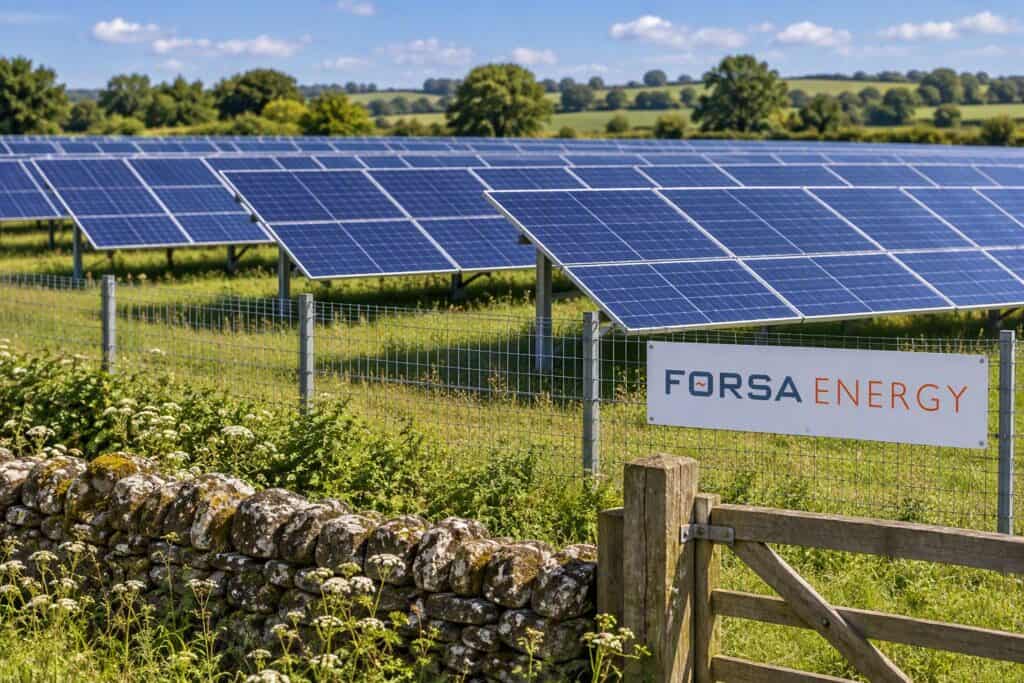
- First Solar was scheduled to commission a 3.4 GWdc module factory in India in 2023, expected to add a 3.5 GWdc factory in Alabama in late 2024, and planned to expand its Ohio footprint by 0.9 GWdc by 2026.
- Enerdatics records four US solar manufacturing financings announced in 2023 with a combined value of $1.84 billion, of which First Solar's $1 billion facility and its $700 million sale of IRA tax credits to Fiserv account for about 92 percent.
What kind of facility did First Solar actually sign?
A revolving credit and guarantee facility, which is a standing line rather than a one-off loan. A revolving credit facility lets the borrower draw cash, repay it and draw again at any point during its life, here five years. The borrower pays a small fee on the unused part and interest only on what it draws.
That makes the $1 billion a ceiling, not a disbursement. The record describes the facility, not any drawing on it. A company sitting on a line like this can fund a factory build without drawing a cent, as long as the line is there if cash comes in late or costs come in high.
This is a different instrument from the project finance that dominates renewable energy lending. Project debt is secured on one asset and repaid from its revenues. A corporate revolver is lent against the whole company's balance sheet, which is why eleven large commercial banks sit in the syndicate rather than a handful of specialist project lenders.
Why does a quarter of it sit in letters of credit?
Because a manufacturer of First Solar's size makes a great many promises that counterparties want backed by a bank. A letter of credit is a bank's undertaking to pay a named beneficiary if the borrower fails to meet an obligation. No money moves unless the obligation is missed.
For a module maker building factories in two countries at once, those obligations are everywhere. Construction contracts, equipment orders, supply agreements and customer contracts can all call for security. Posting cash ties up working capital. A letter of credit from a bank in the syndicate does the same job at a fraction of the cost.
So the $250 million carve-out is less about borrowing and more about credibility. It lets First Solar sign large commitments without parking cash against each one. That is why the facility is described as a credit and guarantee facility rather than a loan, and why the headline amount overstates the cash that is likely to move.
What is the facility meant to support?
A manufacturing build-out spread across the US and India. The record lists a 3.4 GWdc factory in India scheduled for commissioning in 2023, a new 3.5 GWdc factory in Alabama expected in late 2024, and a 0.9 GWdc expansion of the existing Ohio footprint by 2026. GWdc measures the direct current output rating of the modules a factory can produce in a year.
Alongside the factories, First Solar is investing up to $370 million in a new research and development centre in Perrysburg, Ohio, expected to be commissioned in 2024. The company's modules use thin-film photovoltaic technology developed at its labs in California and Ohio, which it positions as a lower-carbon alternative to conventional crystalline silicon panels.
A five-year revolver lines up neatly with that timetable. The Alabama factory and the Ohio expansion fall inside its life. If construction runs over budget or customer payments lag, the line absorbs the timing gap without First Solar going back to the market mid-build.
Enerdatics records four US solar manufacturing financings announced in 2023, worth a combined $1.84 billion. First Solar accounts for $1.7 billion of that across two transactions: this $1 billion facility in July and a $700 million sale of IRA tax credits to Fiserv in December. The other two are far smaller: CubicPV's $103 million equity raise in June and REC Silicon's $40 million loan from Nonghyup Bank in September for the restart of its Moses Lake facility. In the US solar manufacturing slice of Leap for that year, one company is close to the whole market.
What does the facility signal for US solar manufacturing?
It signals that, in 2023, US solar manufacturing finance ran mostly on balance sheets that already existed. A corporate revolver of this size rests on an operating business lenders already know. The other manufacturers in the set raised equity or smaller loans, at a fraction of the size.
The tax credit sale six months later shows the second half of the picture. Tax credits under the Inflation Reduction Act can be sold for cash to companies with tax bills, and First Solar did exactly that with Fiserv. A revolver for liquidity and a tax credit sale for cash flow are two separate tools, and First Solar used both inside a single year.
Other US manufacturers took a different route. BlueOval SK, the Ford and SK On battery venture, went to a public lender, securing a loan commitment from the US Department of Energy, covered in Enerdatics' timeline of the BlueOval SK DOE loan. An established manufacturer can lean on commercial banks for standing liquidity. A new joint venture building at scale turned to a government lender instead.
Developers of large portfolios use the same tool. Leap records Invenergy securing a $1.5 billion revolving credit facility from a syndicate of banks in August 2023 for business development. For the largest players in US clean energy, a billion-dollar corporate revolver sits alongside, and separate from, the project debt beneath individual assets.
Frequently asked questions
How large is First Solar's credit facility?First Solar entered into a five-year revolving credit and guarantee facility of $1 billion on 30 June 2023. Up to $250 million of it is available for letters of credit rather than cash drawings.
Which banks are in First Solar's $1 billion facility?J.P. Morgan Chase Bank is lead arranger and administrative agent. Bank of America, Citibank, Credit Agricole CIB, PNC Bank, BNP Paribas, Goldman Sachs Bank USA, HSBC Bank USA, MUFG Bank, Standard Chartered Bank and Truist Bank provided the financing.
What is the facility for?The facility supports the expansion of First Solar's manufacturing operations in the US and globally, including a 3.4 GWdc factory in India, a 3.5 GWdc factory in Alabama and a 0.9 GWdc expansion in Ohio.
Ready to get deal-ready answers in seconds? Try Enerdatics Leap AI and access verified intelligence across M&A, financings, PPAs, projects, and energy market developments through natural language.