Neoen has raised about $722 million from 11 lenders against a 1.5 GW portfolio of wind, solar and battery assets in Australia. Most of the portfolio has been running for years. Most of the money is replacing debt that already exists. What the rest of it pays for is a project that was not finished when the loan was signed.
Key takeaways
- Neoen closed a debt financing of $721.92 million in February 2024 for a 1,463 MW portfolio of wind, solar and battery storage assets in Australia, with maturities of five and seven years.
- The financing refinances approximately $460 million (AU$700 million) of existing debt and funds new assets, starting with Neoen's 219 MW Collie Battery Stage 1 in Western Australia.
- The 11 lenders are ANZ, Bank of China, the Clean Energy Finance Corporation, CBA, China Construction Bank, HSBC, ING, Mizuho, MUFG Bank, Societe Generale and Westpac.
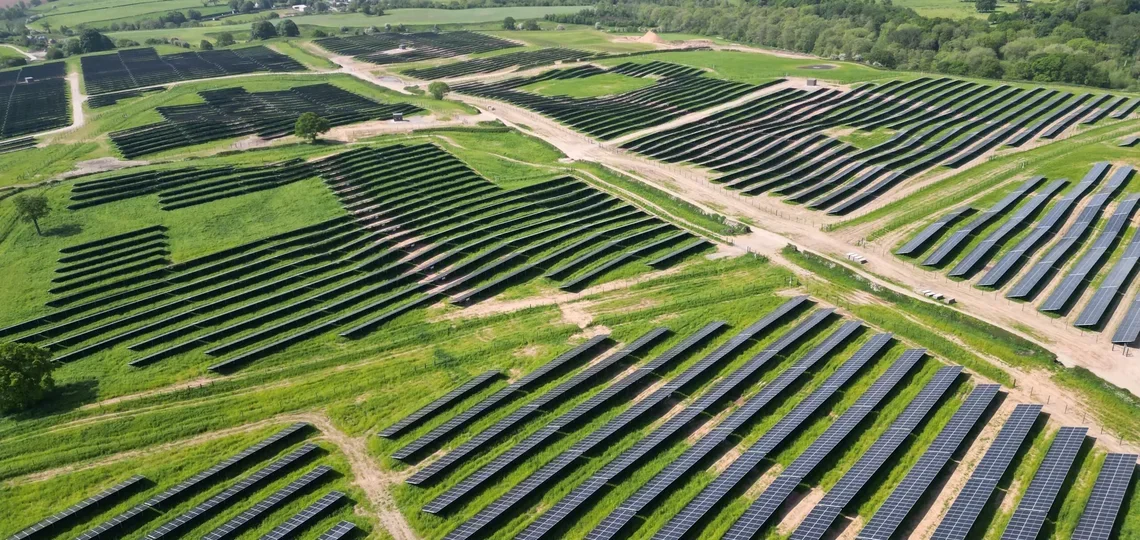
- The portfolio includes the 460 MW Western Downs solar farm, the 194 MW Bulgana wind farm, the 149 MW Coleambally and 128 MW Numurkah solar farms, the three phases of the 313 MW Hornsdale wind farm and the 219 MW Collie battery.
- Enerdatics records 31 debt financings for renewable energy in Australia across 2023 and 2024, of which 25 disclose an amount; Neoen's $722 million is the fifth largest.
Why refinance assets that are already running?
Because operating assets are worth more to a lender than projects under construction, and debt raised during construction is priced for construction risk. Once a wind or solar farm has a few years of output data and a contracted buyer, the risk a lender carries falls sharply. Refinancing captures that fall. It can lower the cost of debt, extend or reshape the repayment profile, or release cash that the original lenders would not have advanced.
Neoen's portfolio is mostly in that position. Of the 1,463 MW, 1,244 MW was already operating when the loan was signed: Western Downs reached commercial operation in June 2023, Bulgana in December 2021, Coleambally in November 2021 and Numurkah in July 2021, alongside the three Hornsdale phases. Only Collie was still being built, with commercial operation then expected in December 2024. Pooling running assets with one under construction lets the stable cash flows carry the newer project.
What is left over after the refinancing?
Roughly $260 million, on the figures in the record. The facility totals $721.92 million and about $460 million of it replaces existing debt. The balance is new money, and the first named use is Collie Battery Stage 1, a 219 MW battery in Western Australia.
That is the real point of the transaction. A battery earns its revenue by charging when power is cheap and discharging when it is expensive, and by selling grid services, so its income is less predictable than a solar farm with a long-term contract. That can make it harder to finance on its own. Folding Collie into a portfolio dominated by contracted solar and wind lets Neoen fund the battery on the strength of its older assets. The record does not say how the debt is secured or how it is split between the projects, so the exact allocation to Collie is not public.
The lender group is as wide as the portfolio. Four of the 11 are Australian: ANZ, CBA, Westpac and the Clean Energy Finance Corporation. Two are Chinese, Bank of China and China Construction Bank. Two are Japanese, MUFG and Mizuho, and three are European, ING, Societe Generale and the UK's HSBC. A syndicate that broad keeps each bank's share of the exposure small, which is what makes a single facility across six sites workable.
Who stands behind the cash flows the lenders are relying on?
Mainly state-linked and large corporate buyers. Western Downs, the largest asset, sells 320 MW of its output to CleanCo, which signed the contract with Neoen in May 2020. CleanCo has since resold power from the farm to Coles, Wesfarmers and the BHP Mitsubishi Alliance. Bulgana sells to Nectar Farms and the Victorian Government, and Coleambally to EnergyAustralia.
That mix is what makes a five and seven year loan workable against assets that will run for decades. The tenor is short compared with the life of the contracts beneath it, which means Neoen will need to refinance again. The implicit bet is that the portfolio will look even less risky to lenders when it does. Neoen's appetite for bank debt is not limited to Australia either: it has also raised French construction debt for a mixed solar and wind portfolio in its home market.
Enerdatics records 31 debt financings for renewable energy in Australia announced across 2023 and 2024, and 25 of them disclose an amount. Neoen's $722 million ranks fifth. Above it sit Global Power Generation's $1,497 million, Neoen's own $889 million raised in December 2024 from 11 lenders, Atmos Renewables' $850 million refinancing in February 2023 and Fotowatio Renewable Ventures' $785 million refinancing of its PV portfolio in July 2024. Spread across 1,463 MW, Neoen's February facility works out at about $0.49 million per MW. That is a portfolio average across mostly operating assets, so it says more about how much existing debt was being replaced than about the cost of building anything.
What does the deal signal for Australian renewable financing?
That refinancing is becoming a funding source in its own right. Three of the five largest Australian debt raises Enerdatics records in 2023 and 2024 were portfolio refinancings: Atmos, Fotowatio and Neoen. Each put an operating portfolio onto a new bank facility, and in Neoen's case part of the proceeds went straight into new capacity.
Neoen's return to the market ten months later, with an $889 million facility for assets in construction backed by much the same lender group, shows the cycle running. In Neoen's February facility, the first named destination for that capital was a battery, financed alongside an operating fleet rather than on its own. For lenders, the attraction is scale and diversification; for sponsors, it is a way to grow without waiting for each new project to stand on its own merits.
Frequently asked questions
How much did Neoen raise in its February 2024 Australian financing? Neoen raised $721.92 million in debt with maturities of five and seven years from 11 Australian and international lenders. About $460 million (AU$700 million) refinances existing debt.
Which assets are in the Neoen financing? The 1,463 MW portfolio covers Western Downs, Coleambally and Numurkah solar farms, the Bulgana and Hornsdale wind farms, and the 219 MW Collie Battery Stage 1 in Western Australia.
What is the new money for? The financing funds new assets in addition to the refinancing, starting with Collie Battery Stage 1, which was expected to begin commercial operation in December 2024.
Ready to get deal-ready answers in seconds? Try Enerdatics Leap AI and access verified intelligence across M&A, financings, PPAs, projects, and energy market developments through natural language.