Codelco, the Chilean state copper miner, has signed a 15-year power contract with Innergex for about 350 GWh a year. It is one of three contracts Codelco awarded on the same day, and the smallest by annual volume in Leap's records. Innergex has not named a single wind farm or solar plant behind it. The contract is backed by a whole portfolio, and part of that portfolio has not been built yet.
Key takeaways
- Innergex signed a 15-year power purchase agreement with Codelco in Chile, announced on 1 March 2024, to supply about 350 GWh of electricity a year from 2026 to 2040.
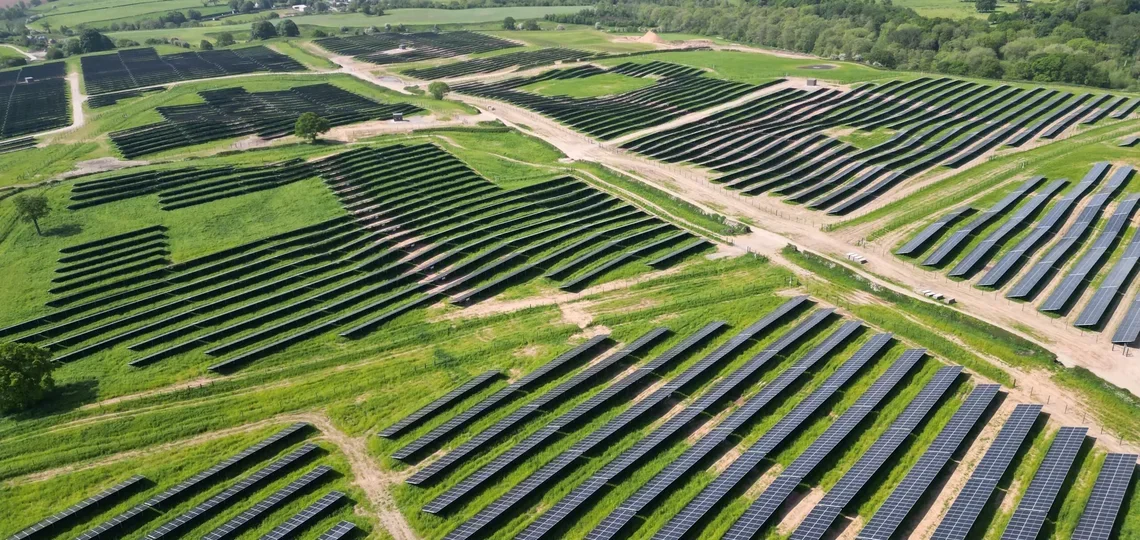
- The Innergex and Codelco PPA secures revenues for the equivalent of 135 MW of wind and solar capacity, supplied from Innergex's portfolio of operating assets and projects under development rather than from one named project.
- Codelco awarded about 1.8 TWh a year to three suppliers on the same day: about 1,100 GWh to Colbun, 375 GWh to Atlas Renewable Energy and 350 GWh to Innergex, according to Leap's records.
- Innergex has 705 MW of installed capacity in Chile, including 50 MW of battery storage, and about 620 MW of projects at different stages of development across hydro, wind, solar and storage.
- Enerdatics records 32 power purchase agreements in Chile announced between January 2023 and December 2025, ten of them with Codelco as offtaker, and none of the 32 carries a disclosed tariff.
What does Codelco get from splitting one tender three ways?
Codelco gets diversity of supply without giving up contract length. All three awards from the March 2024 round run on the same timetable, starting in 2026 and ending in 2040, so the miner has fixed the shape of its demand once and spread the delivery risk across three counterparties.
The split is lopsided. Colbun took roughly three fifths of the volume. Innergex and Atlas each took about a fifth. Leap's records disagree slightly on Atlas: its own record carries 375 GWh in the structured field and about 350 GWh in its narrative, so the gap between Atlas and Innergex may be smaller than the headline numbers suggest. Either way, Innergex holds the smaller of the two minority slices.
A power purchase agreement, or PPA, is a long-term contract under which a buyer agrees to take electricity from a generator at terms set in advance. For a copper miner, the point is predictability. Mining runs around the clock, and a fixed contract for a decade and a half turns one of its largest operating costs into a known number.
Why does a portfolio contract matter more than a project contract?
A project contract ties a buyer to one plant. A portfolio contract ties the buyer to the supplier. Innergex will meet its obligation from whatever mix of its Chilean hydro, wind, solar and storage assets is producing, including projects that are still in development.
That changes who carries the risk. If one plant underperforms, Innergex can lean on the others. Codelco does not need to care which asset delivers on a given day, only that the volume arrives. The trade-off sits with Innergex, which is committing future output from capacity it has not finished building.
The arithmetic shows how much of the fleet is committed. The 135 MW equivalent backing the contract is about a fifth of Innergex's 705 MW installed base in Chile. Delivering 350 GWh a year from 135 MW implies those megawatts run at roughly 30 percent of their maximum output across a year, a plausible blend for wind and solar but not one any single solar plant would reach on its own. The figure describes a mix, which is exactly what the portfolio structure allows.
How does the Innergex deal compare with Codelco's earlier contracts?
It is smaller and more conventional. Codelco's 2023 contracts in Leap were with AES Andes, which supplies the miner under a 980 MW agreement announced in January 2023 and a 210 MW agreement announced later that month, the second running for 17 years. The Innergex contract is the smallest of the three Codelco deals in Leap that disclose a capacity figure.
Duration is where Codelco has been most consistent. Of the ten Codelco PPAs Leap records from 2023 to 2025, nine disclose a term, and eight of those run for 15 years or longer. The exception is a seven-year, 1 TWh contract with ENGIE announced in May 2024, two months after the Innergex award. Codelco appears willing to buy shorter blocks of power alongside its long-dated base, which suggests the three-way March tender was the foundation layer rather than the whole plan.
Innergex has been building its long-dated contract book elsewhere too. Its Boswell Springs wind project in Wyoming is financed against a 30-year PacifiCorp contract. Chile adds a state-owned industrial buyer to that contract book.
Enerdatics' data shows a market that is busy but opaque on price. Leap records 32 Chilean PPAs announced between January 2023 and December 2025. Codelco is the offtaker on ten of them, more than any other buyer. Not one of the 32 carries a disclosed tariff. Of the 28 that state a duration, 18 run for exactly 15 years, and the shortest run for five or six years with smaller commercial buyers.
What does the deal signal for Chilean renewables?
It signals that mining demand, not utility auctions, is setting the pace for long-term renewable contracting in Chile. Codelco alone accounts for nearly a third of the PPAs Leap records in the country over three years, and other miners such as Antofagasta Minerals and Collahuasi have signed with Colbun. Generators that want bankable revenue in Chile increasingly need a mining customer.
It also signals a shift in what those contracts are backed by. Leap's 2025 Codelco awards include standalone battery and solar plus storage projects, such as the Dune and La Pampina contracts with Generadora Metropolitana. Buyers who run around the clock want power at night as well as at midday. Portfolio suppliers like Innergex, with hydro, wind and storage alongside solar, are well placed for that. Single-technology solar developers have to add batteries to compete.
The investors who back Chilean renewables, such as GIP in its AES Andes portfolio deals, are buying into exactly these contracted cash flows. The more of a portfolio sits under a 15-year mining contract, the easier it is to price. The difficulty for anyone benchmarking those deals is the one Enerdatics' data makes plain: the contracts are long, the counterparties are named and the price is almost never disclosed.
Frequently asked questions
How much electricity will Innergex supply to Codelco? About 350 GWh a year for 15 years, from 2026 to 2040, equivalent to 135 MW of wind and solar capacity, according to the Leap record of the March 2024 agreement.
Which projects will supply the Codelco contract? No single project is named. Innergex will supply the power from its Chilean portfolio of operating assets and projects under development, which includes 705 MW of installed capacity and about 620 MW in development.
Who else won Codelco's March 2024 tender? Colbun was awarded about 1,100 GWh a year and Atlas Renewable Energy about 375 GWh a year, both for 15-year terms running to 2040, alongside Innergex's 350 GWh.
Ready to get deal-ready answers in seconds? Try Enerdatics Leap AI and access verified intelligence across M&A, financings, PPAs, projects, and energy market developments through natural language.