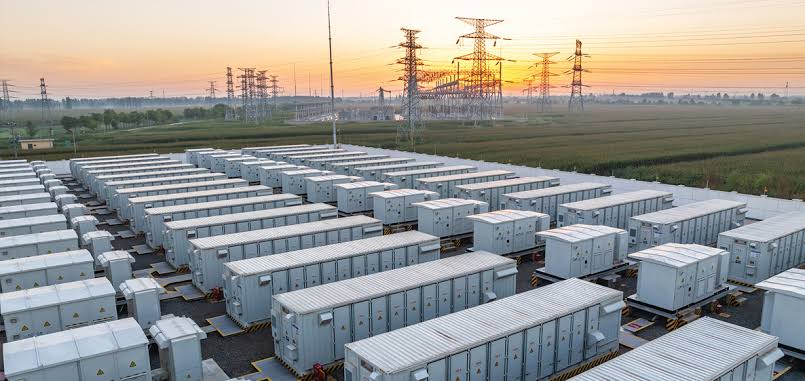
Harbert Management has agreed to buy a 179 MW wind portfolio from RWE, and neither side has said so publicly. What our sources show is not really a wind portfolio at all. It is a bundle of utility contracts with turbines attached.
Key takeaways
- Harbert Frontier Investors, LLC, backed by funds controlled by Harbert Management Corporation, signed a Membership Interest Purchase Agreement dated 27 October 2026 to acquire 100 percent of CED Wind Holdings, LLC from RWE.
- The portfolio comprises five operational onshore wind farms totalling 178.83 MW: the 94.33 MW Campbell project in Campbell County, South Dakota, the 25 MW Big Timber project in Sweet Grass County, Montana, the 20 MW CED Aurora and 20 MW CED Brule projects in Aurora and Brule counties, South Dakota, and the 19.5 MW Oak Tree project in Clark County, South Dakota.
- The Campbell wind farm holds a 30-year fixed-price power purchase agreement with Basin Electric Power Cooperative expiring on 31 December 2045.
- NorthWestern Energy has contracted the entire output of Oak Tree, CED Aurora, CED Brule and Big Timber under agreements expiring in December 2034, September 2038, September 2038 and March 2043 respectively, and Big Timber recorded an average contracted price of $45.49 per MWh in 2024 according to NorthWestern Energy's 2026 Montana Integrated Resource Plan.
- The portfolio has a capacity-weighted average asset maturity of about 10 years and a capacity-weighted average remaining contracted life of about 16 years.
What is Harbert buying if every megawatt is already sold?
A contracted revenue stream with a known end date, which is a different asset class from an operating wind farm exposed to power prices. Every one of the five projects has its full output committed to a single counterparty, and the earliest of those commitments does not expire until December 2034. On a capacity-weighted basis the portfolio has about 16 years of contract left against assets that are about 10 years old, so the contracts outlast the remaining warranty and refit cycle of the turbines themselves.
That changes what the buyer is underwriting. There is no merchant tail to model for the next eight years, no basis risk to hedge and no offtake renegotiation to plan for. What is left is availability, operating cost and counterparty credit. Two counterparties carry the whole portfolio: Basin Electric Power Cooperative takes 94.33 MW, which is 52.8 percent of capacity, and NorthWestern Energy takes the remaining 84.5 MW.
Why does the portfolio sit in two balancing authorities?
Because it was assembled around two utilities rather than around one grid. A balancing authority is the entity responsible for matching supply and demand within a defined footprint, and it sets the rules a generator settles under. Four of the five farms sit in SPP territory in South Dakota. The fifth, Big Timber, sits in the NorthWestern Energy balancing authority area in Montana, which is outside the organised markets entirely.
The split is 153.83 MW in South Dakota against 25 MW in Montana, so Montana is 14 percent of capacity. For a portfolio sold under fixed-price contracts that division matters less than it would for a merchant owner, because the contract rather than the market sets the price received. It matters for operations, since two balancing authorities means two sets of interconnection and scheduling arrangements for five assets that average 36 MW each, and that cost sits directly against the contracted margin.
What does the one disclosed price tell us?
More than the deal value does, because there is no deal value. The Big Timber figure of $45.49 per MWh, drawn from a utility resource plan rather than from the transaction, is the only price on record anywhere in the portfolio. It is a 2024 average for a 25 MW project contracted to 2043, which means a buyer can anchor roughly a seventh of the capacity on a published number and has to infer the rest.
That is the usual position in this market. Enerdatics identified both the deal and its structure from a regulatory filing, and flags that there has been no public disclosure by either buyer or seller. Ares Management's purchase of three Oklahoma wind farms from TransAlta in the same month shows the opposite problem, where a price was disclosed but the stake size made the obvious arithmetic wrong by a factor of two.
Enerdatics records 41 transactions involving operational US wind assets since the start of 2024. Seventeen of them carry a disclosed value, which is 41 percent, and across those seventeen the median price is $0.97 million per MW, with a quartile range of $0.68 million to $1.24 million and prints as far apart as $0.37 million and $2.33 million. At the median, 178.83 MW implies something near $173 million. Six of the 41 carry an EV to EBITDA multiple, with a median of 10.56 times.
What does the deal signal for US onshore wind?
That fully contracted operating wind in non-coastal markets is trading, and that the buyers are credit investors rather than developers. Harbert is acquiring a holding company, not individual projects, and taking 100 percent of it. A portfolio with 16 years of fixed-price contracts and no development pipeline attached offers nothing to a strategic owner looking for growth, and almost everything to an investor sizing a yield against counterparty credit and turbine availability.
The second signal concerns RWE. Selling five mid-sized farms with long contracts in place is a disposal of capital rather than a retreat from the market, and the assets being sold are exactly the ones a large owner finds least efficient to operate: five sites averaging 36 MW, in two states, under two balancing authorities, with four different contract expiry dates. South Dakota's wind resource is strong enough to support load factors above 51 percent, so the output is not the issue. The issue is that scale in this business comes from concentration, and this portfolio has none.
Frequently asked questions
What is Harbert Management buying from RWE?One hundred percent of the equity in CED Wind Holdings, LLC, which owns five operational wind farms totalling 178.83 MW through project subsidiaries, under a Membership Interest Purchase Agreement dated 27 October 2026. The acquiring vehicle is Harbert Frontier Investors, LLC.
How much is Harbert paying for the wind portfolio?No consideration has been disclosed. Enerdatics identified the transaction through a FERC application filed on 28 October 2026 and notes no public disclosure by either party. Across US operational wind deals since the start of 2024 the median disclosed price is $0.97 million per MW.
Are the wind farms contracted?Yes, all five. Campbell holds a 30-year fixed-price agreement with Basin Electric Power Cooperative to 31 December 2045, and NorthWestern Energy holds the full output of the other four under agreements expiring between December 2034 and March 2043.
Ready to get deal-ready answers in seconds? Try Enerdatics Leap AI and access verified intelligence across M&A, financings, PPAs, projects and energy market developments through natural language.