Powering the Future: Strategic Funding Meets Energy Transition Momentum
As Europe’s energy landscape rapidly evolves in the wake of policy reforms and decarbonization pressures, Greenvolt’s latest move—securing approximately $173 million in funding from KKR—couldn’t be more timely. In a market increasingly favoring sustainable infrastructure, this financing goes beyond just capital infusion—it signals a strategic leap into the heart of the continent’s energy transition. This blog unpacks how Greenvolt plans to leverage this capital, why KKR is doubling down on battery storage, and what this means for the broader energy market.
Scaling Ambitions in a Supportive Policy Climate
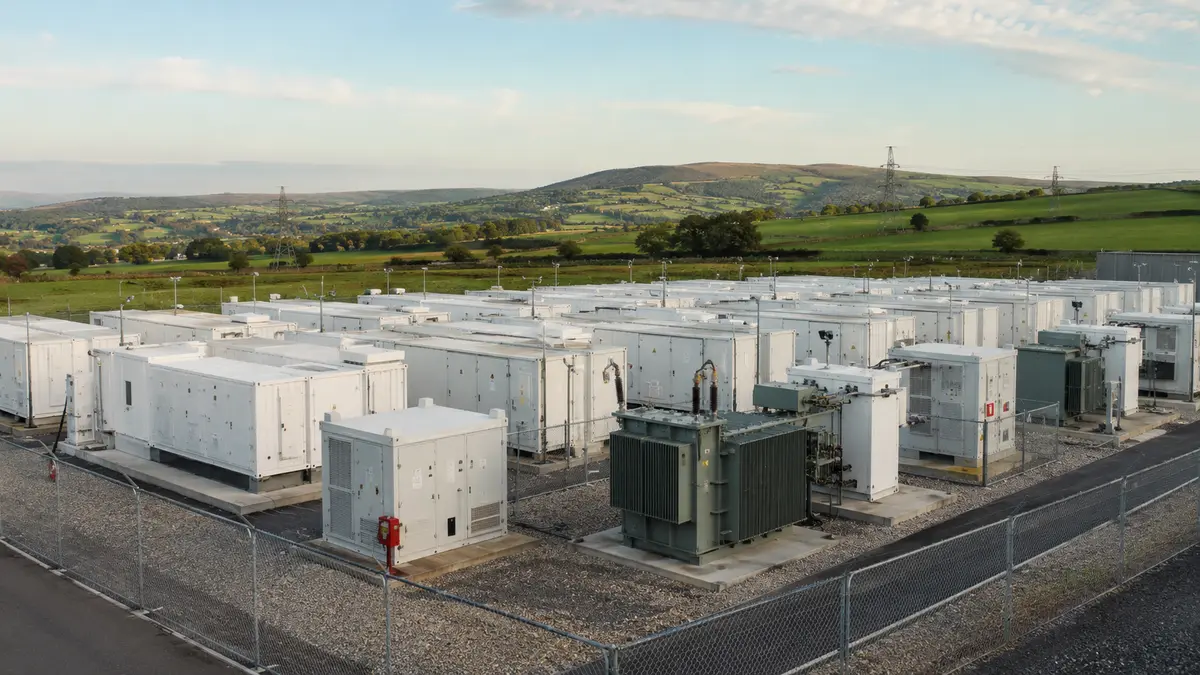
Greenvolt’s decision aligns perfectly with a European energy environment that now treats battery storage as indispensable. Following the energy crisis, regulatory frameworks have been recalibrated to prioritize resilience and decarbonization. EU policy momentum has turned battery energy storage systems (BESS) from fringe assets to foundational infrastructure. Greenvolt is moving fast, aiming to deploy its 4.3 GW BESS pipeline—spanning Poland, Hungary, and the UK—with critical projects already breaking ground. This new funding doesn’t just ensure continuity; it accelerates the rollout while safeguarding Greenvolt’s balance sheet. By rotating assets smartly and minimizing dependency on external debt, the company ensures liquidity and operational agility—a crucial advantage in today’s volatile energy landscape.
KKR’s Bet on Storage as the New Core Asset Class
From the investor side, KKR’s financing structure reflects a calculated strategy to hedge risks and secure stable returns. With rising interest rates and increasing pressure on traditional asset classes, energy storage offers long-term, policy-backed revenue models that institutional capital craves. KKR’s hybrid debt-equity model ensures both control and yield predictability—an approach that mirrors their $450 million credit strategies with Powin and Peregrine Energy. This isn’t a one-off. It's part of a growing trend where private credit is becoming the engine behind clean tech infrastructure. KKR’s infusion into Greenvolt underscores energy storage not just as an environmental necessity, but as an economic opportunity.
Future-Proofing Growth with Financial Flexibility
Beyond immediate capital deployment, this deal sets Greenvolt up for sustained leadership. With robust liquidity and reduced reliance on costly debt, the company can accelerate its renewable and storage portfolios without compromising financial stability. Whether it’s utility-scale projects or hybrid energy systems, this funding allows Greenvolt to remain nimble—adapting quickly to new regulations, market signals, and technological advancements. It’s a masterclass in leveraging capital not just for growth, but for resilience.
As the European energy narrative continues to evolve, expect Greenvolt to be at the forefront of this transition—driven by strategic capital and a clear vision. Curious how this trend could shape future investments or energy policy? Share your thoughts in the comments, or explore more insights on our website.
.jpeg)