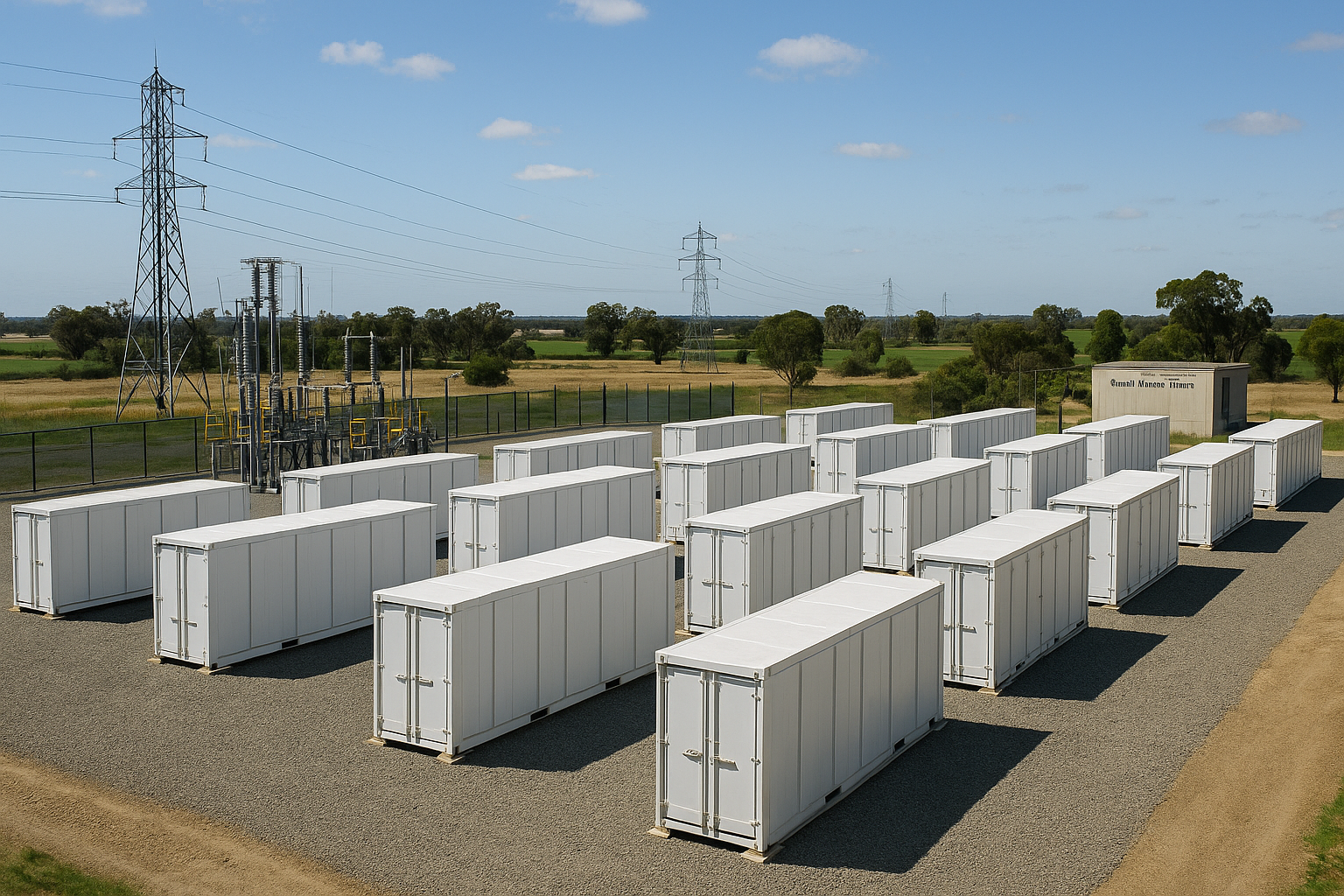
Battery Energy Storage Systems (BESS) are the unsung heroes of the renewable energy revolution, stabilizing grids and ensuring supply during demand spikes. In a significant move for Australia’s energy transition, ACE Power announced on August 21, 2025, the sale of its Kerang BESS project in Victoria to Banpu Energy Australia. Though financial terms remain undisclosed, this deal represents much more than a transaction — it showcases the strategic handover of a project that has evolved from greenfield development to a fully permitted, ready-to-build asset.
The Kerang BESS project, with a capacity of 103 MW/206 MWh, is strategically positioned just 5 km south of Kerang in Victoria’s Loddon Valley. The project has all necessary approvals in place, including development consent from 2012 and grid connection from AEMO secured in late 2023. Construction is set to commence in 2025, with commercial operation targeted for March 2027. Banpu Energy Australia, through its parent Banpu, is leveraging this acquisition to solidify its presence in the Australian energy market. The project’s location — adjacent to the Kerang Terminal Station — further enhances its grid impact, particularly through the use of grid-forming inverter technology that boosts system resilience and supports more renewable integration.
What sets the Kerang BESS apart is not just its scale but its functionality. Operating in grid-forming mode, the battery will offer critical grid support and unlock new renewable capacity in the region. This capability will be especially valuable in Victoria, a state aggressively transitioning toward renewable energy. Furthermore, the project’s merchant market strategy — selling energy during peak pricing windows — optimizes returns while contributing to grid reliability during high-demand periods. The legal groundwork for this strategic sale was laid by HWL Ebsworth Lawyers, who advised Banpu throughout the acquisition process.
This isn’t the end of the road for ACE Power at Kerang. The company continues to work on a nearby hybrid solar and BESS project, expected to achieve financial close shortly after the battery project. Meanwhile, ACE will also support Banpu in closing the Kerang BESS project financially later in 2025, signaling a long-term commitment to Australia’s clean energy future. For developers, investors, and grid operators, this deal illustrates the increasing viability and importance of storage technologies as cornerstones of renewable infrastructure.
Want to stay ahead in the evolving energy landscape?
Explore our latest insights, project updates, and more at Enerdatics. Don’t forget to subscribe to our newsletter for real-time updates on Australia’s renewable future!